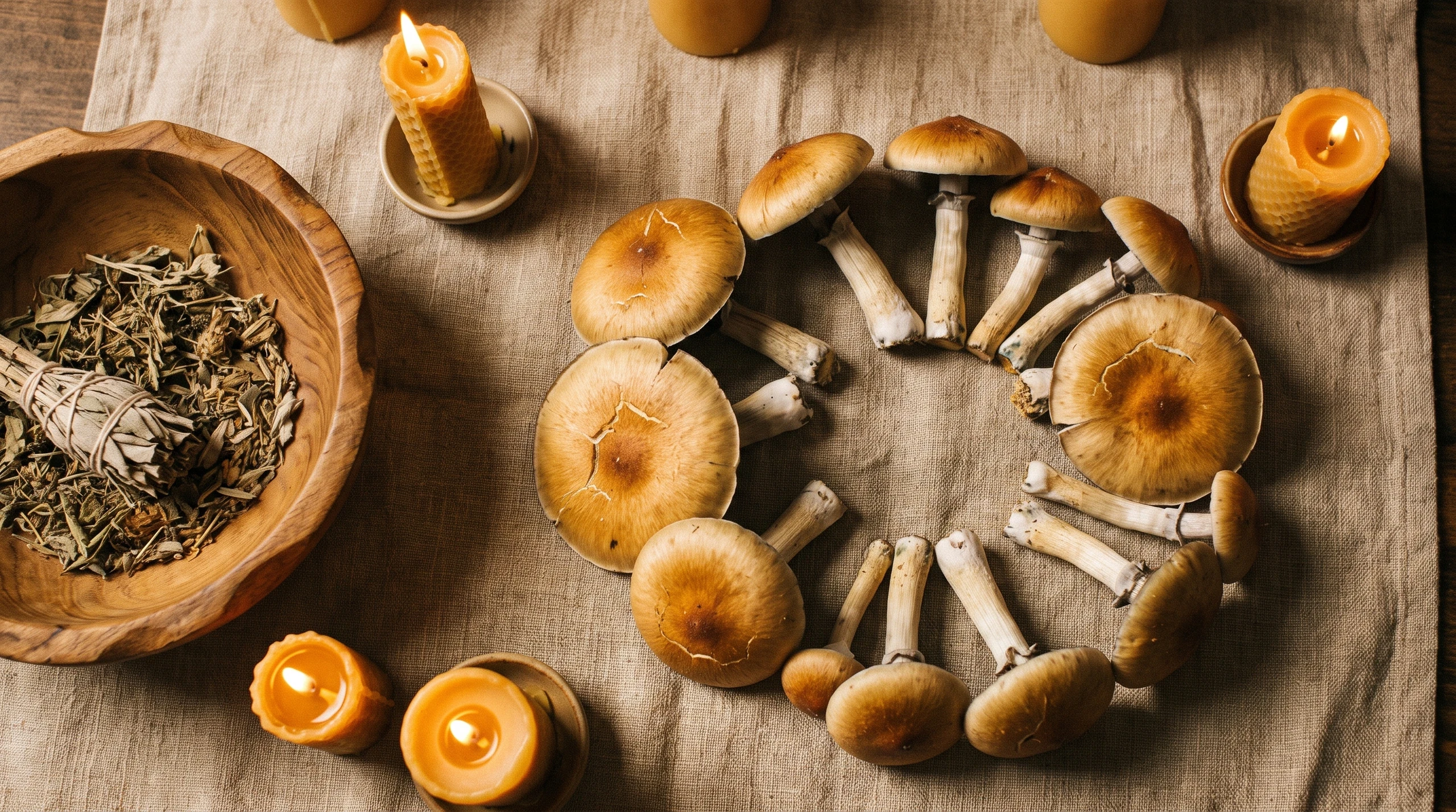
Walk into a psychedelic ceremony in 2026 and the mushroom sitting on the altar, wrapped in cloth or arranged in a wooden bowl, is more likely to be Golden Teacher than any wild harvest. Not because this Psilocybe cubensis cultivar has ancient roots, it does not. Not because shamans in Oaxaca passed it down through generations, they did not. Golden Teacher became the ceremonial mushroom of choice because it was there, abundant and accessible, when the ceremony boom arrived. What started as a cultivator's nickname for a reliable Florida strain became, through repetition and marketing, a name that sounded like it belonged in a ritual. The gap between the name's gravitas and the organism's mundane origins tells you nearly everything about what ceremony means in this context.
The Ayahuasca Template and the Mushroom Problem
Modern psilocybin ceremony borrows its structure almost wholesale from ayahuasca tourism. Retreat centers that sprouted across Costa Rica, Jamaica, and the Netherlands in the 2010s needed a template, and ayahuasca had one ready: the night session, the circle, the intention-setting, the integration talk. Ayahuasca ceremonies were practiced for centuries by indigenous communities in the Amazon, with shamans guiding participants through structured rituals involving music, prayer, and cosmological frameworks. Psilocybin sessions wanted that aura, that sense of continuity with something older than Silicon Valley's optimization culture.

The problem was the mushroom itself. Indigenous Mesoamerican practices involving psilocybin, documented among the Mazatec and other groups, used locally harvested species within specific cultural and spiritual contexts that took generations to develop. You cannot import that wholesale to a retreat outside Amsterdam. Wild Psilocybe species vary in potency and availability. The ceremonial model needed consistency, batch after batch, session after session. Enter the cultivated cubensis.
Golden Teacher fit because it was everywhere. By the time ceremonial psilocybin went commercial, this cultivar was already the default starter strain on forums, in grow kits, in the semi-legal supply chains feeding the new retreat economy. It became psychedelia's icon not through religious use but through internet consensus and cultivator pragmatism. The name did not hurt. "Golden Teacher" sounds like a dharma talk, like something a guide would invoke while lighting candles. That it emerged from Florida pastures and online cultivation communities rather than a lineage of curanderos mattered less than the aesthetic fit.
Why This Cultivar, Specifically
Ceremony requires predictability. A guide running weekend sessions for paying clients cannot work with mushrooms whose potency swings wildly or whose availability depends on rain and cow pasture access. Golden Teacher offered the advantage of any domesticated crop: you grow what you need, when you need it, and while potency still varies cap to cap, the variance sits within a narrower band than wild specimens.
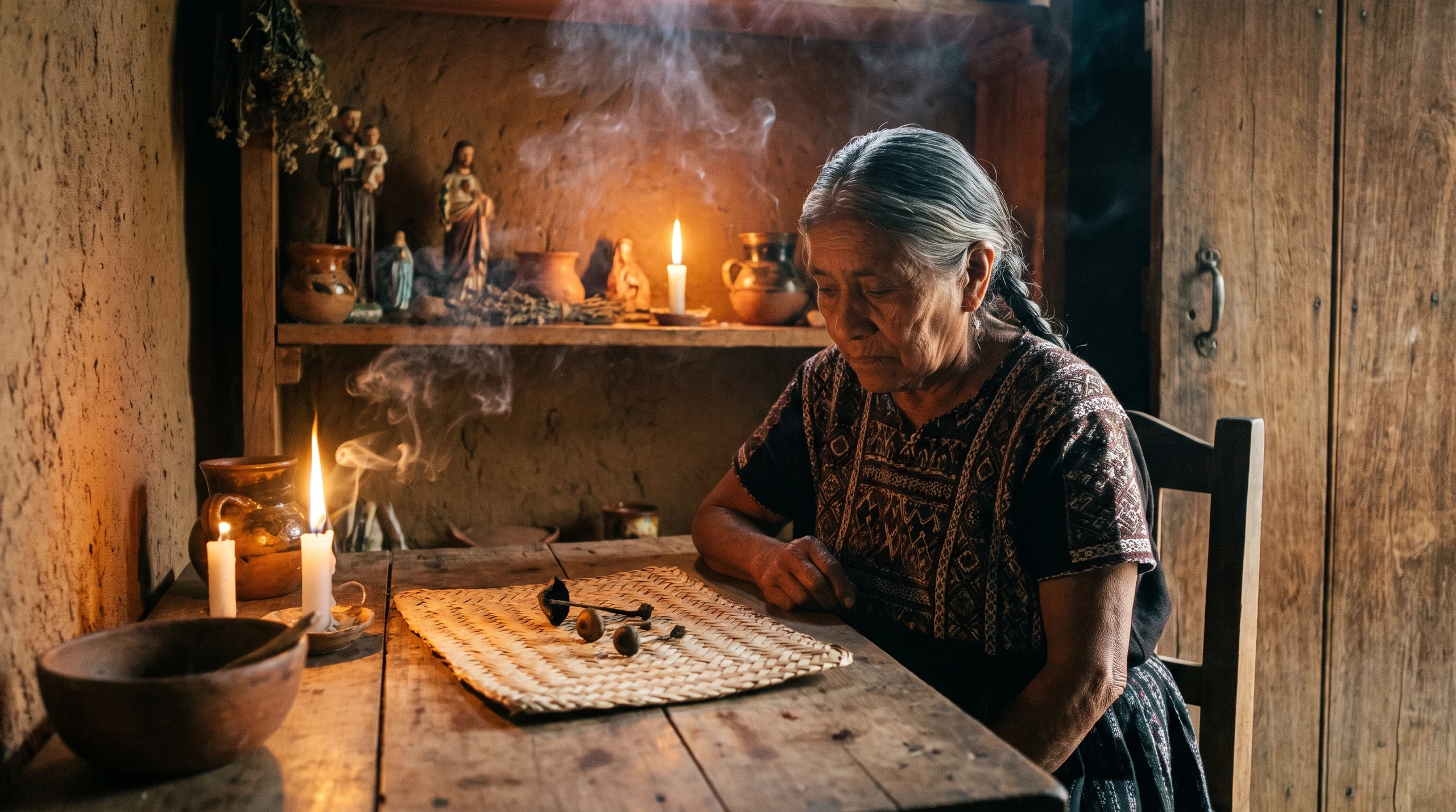
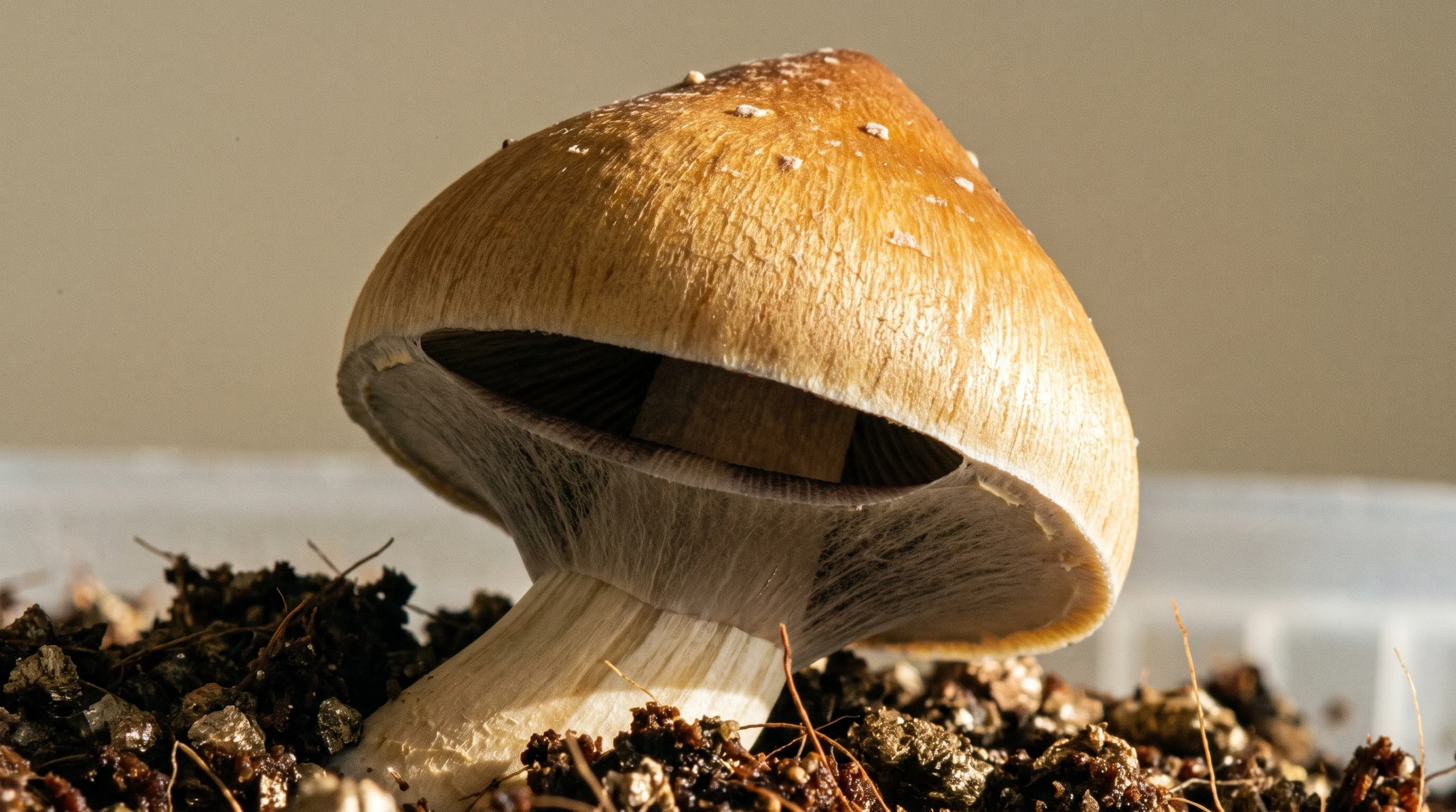
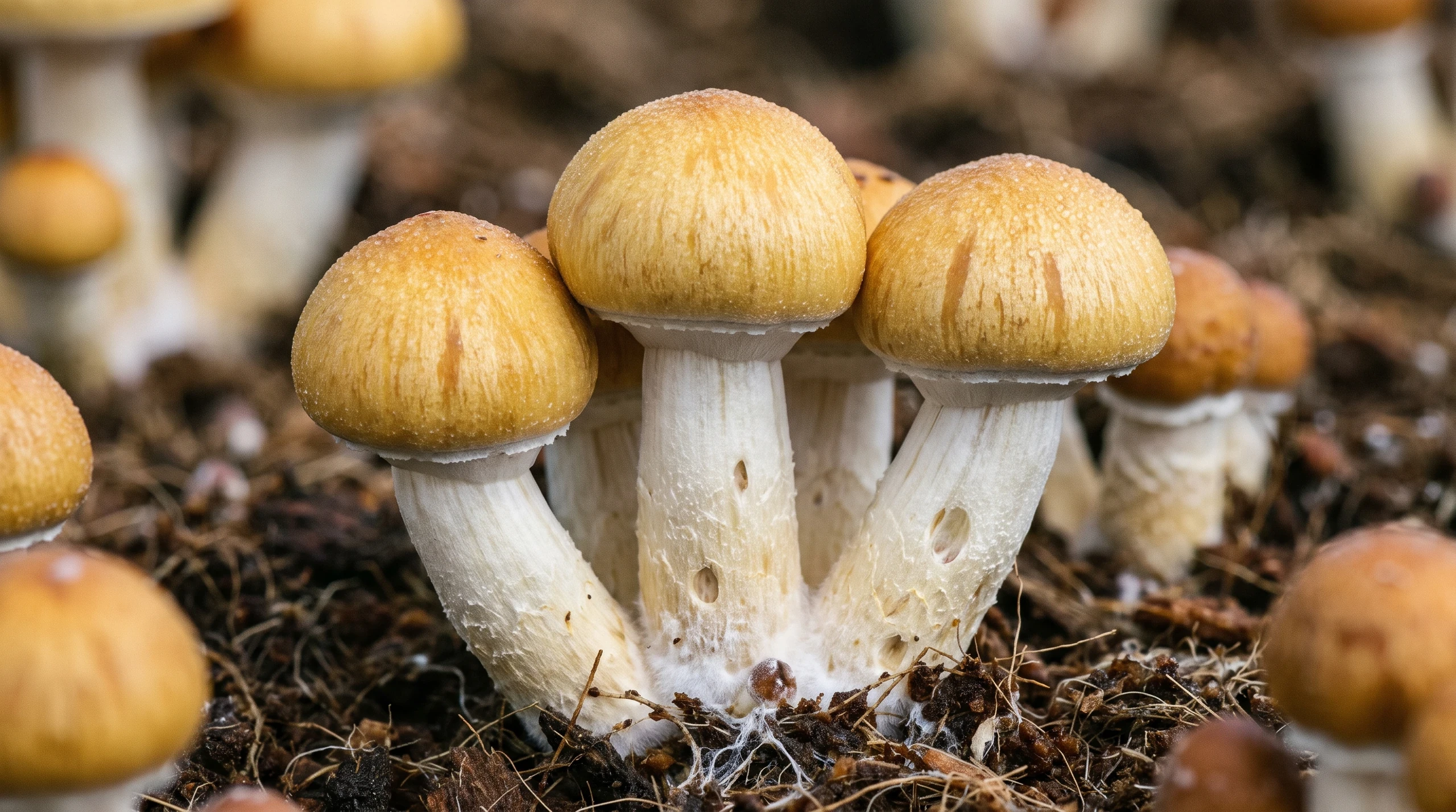
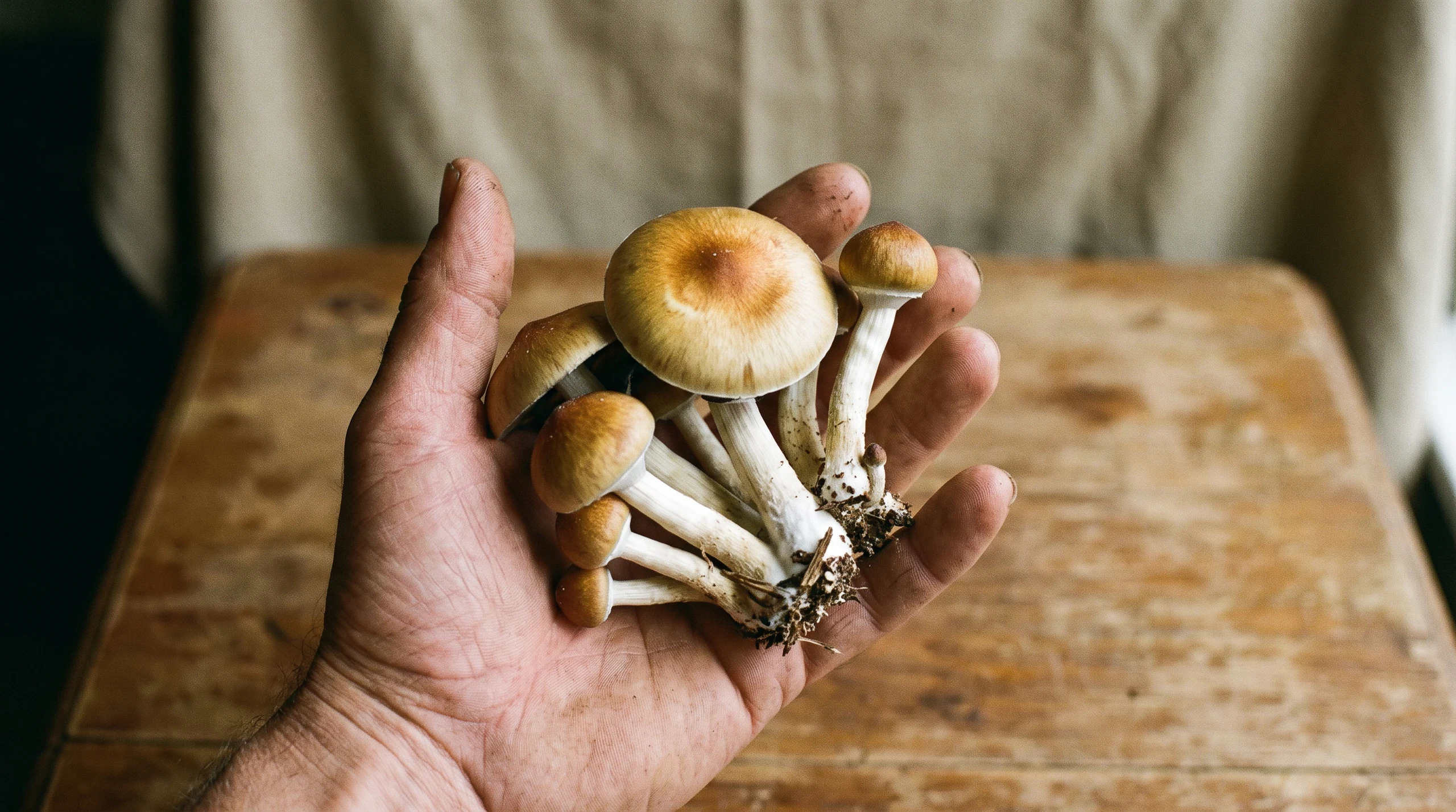
The cultivar's visual identity helped. The wide, golden caps photograph well. They look substantial in a way that appeals to the ceremonial frame, which wants objects that convey weight and intention. A pile of Golden Teacher caps on an altar reads as deliberate, even sacred. The same dose of Psilocybe cyanescens, smaller and darker, might look like something scraped off a log. Aesthetics matter when you are staging ritual, and Golden Teacher's appearance does half the work.
There is also the question of legality and sourcing. Cultivated cubensis strains exist in a gray market far more developed than networks for wild harvesting. Ceremony operators, whether in jurisdictions with decriminalization or tolerance, needed reliable supply lines that did not involve sneaking into national forests or depending on seasonal availability. Golden Teacher's infrastructure was already built by the time ceremony caught on. The cultivar became ceremonial by default, not by design.
What "Ceremony" Means in Practice
The structure of a contemporary psilocybin ceremony pulls from multiple sources, most of them Western reinterpretations of traditions that never used this mushroom. Timothy Leary's concept of "set and setting," formalized in the 1960s, gave the framework language that fit institutional and retreat models. Set, your mindset and intention. Setting, the physical and social environment. Apply those concepts to a weekend in the woods, add music and a talking circle, and you have the basic template.
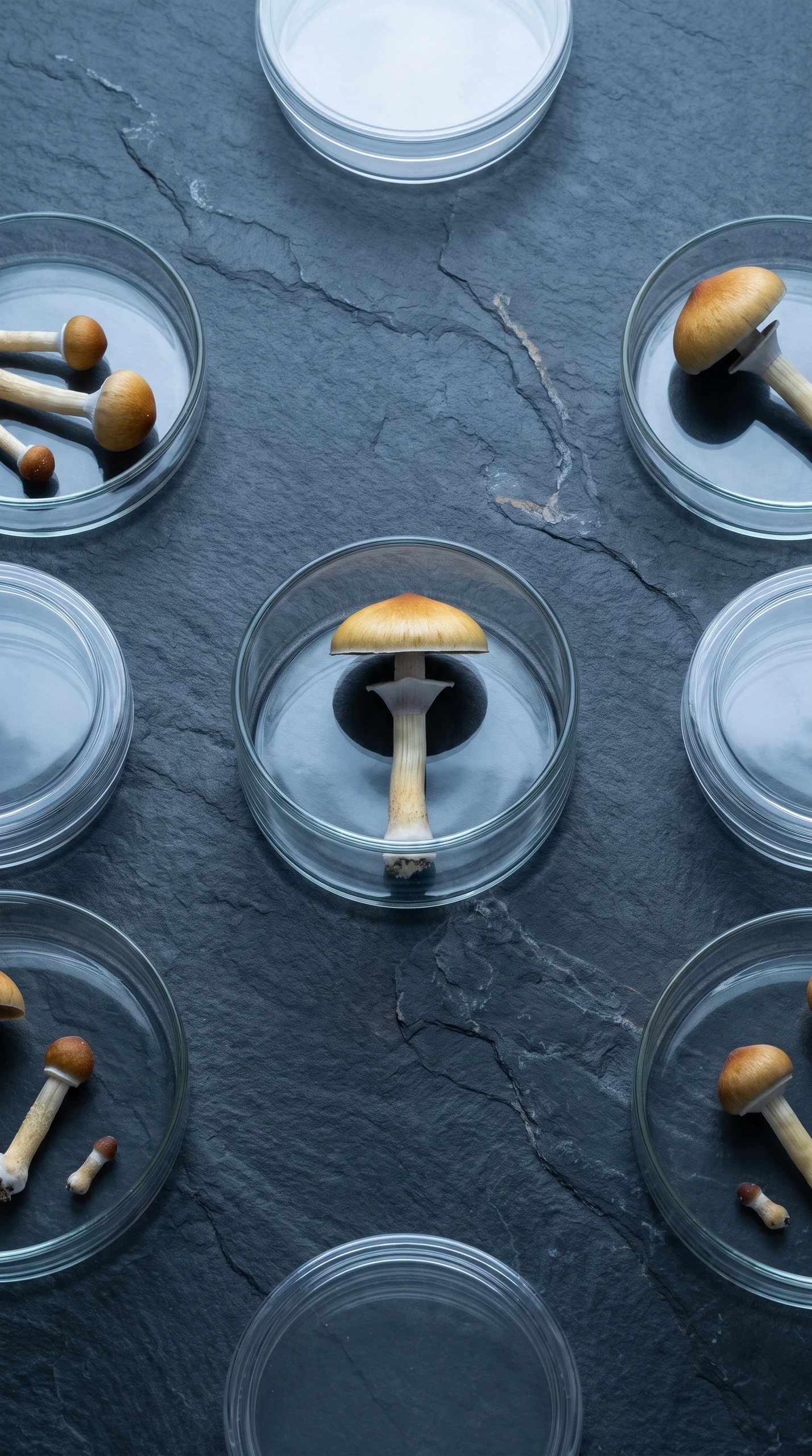
Music is ubiquitous. Research from Johns Hopkins and other institutions identified music as a key variable in positive psilocybin outcomes, and ceremony operators took note. Playlists for Golden Teacher sessions tend toward ambient, world music, and instrumental compositions designed to guide emotional arcs without imposing narrative. Studies on music in psychedelic therapy confirm that carefully chosen soundscapes influence mood, provide emotional anchoring, and deepen introspection. The music does work. It also fills silence and gives participants something to focus on when the experience turns difficult.
Intention-setting, borrowed from therapeutic models and ayahuasca practice, asks participants to articulate a purpose before ingestion. Why are you here. What do you want to understand. The framing is part ritual, part liability management. Set and setting matter for Golden Teacher as much as for any psilocybin experience, and intention-setting is a mechanism for exerting some control over an uncontrollable process. Whether it works as advertised, whether your stated intention has any relationship to what actually unfolds during the session, is a different question. It provides structure.
The Gap Between Tradition and Commodification
Indigenous use of psilocybin mushrooms, primarily in Mesoamerica, involved species like Psilocybe mexicana, P. caerulescens, and others within cultural systems that took centuries to develop. These practices were not static traditions preserved in amber; they evolved within living communities with cosmologies, languages, and healing systems built around the mushroom. The curandera María Sabina, whose Mazatec velada ceremonies introduced psilocybin to Westerners in the 1950s, never used Golden Teacher. The species she worked with were native, gathered locally, integrated into a framework of Catholic and pre-Columbian belief that made sense to the people in that room.

Golden Teacher ceremony is something else. It is a modern invention that borrows aesthetic elements and structural ideas from multiple sources, applies them to a cultivated mushroom with no traditional ceremonial lineage, and sells the result as a return to ancient wisdom. That does not make it fraudulent. It makes it syncretic, which is what most religious and ritual practice is when you trace it back. The issue arises when ceremony operators imply continuity that does not exist, when the language of ancestral knowledge gets used to market sessions with a mushroom that showed up in online cultivation forums three decades ago.
The business model matters. Psychedelic retreats charge thousands of dollars per session. They promise healing, insight, transformation. Some deliver. The ones that take harm reduction and preparation seriously, that screen for contraindications and provide real integration support, may offer something valuable. Others are weekend intensives where ceremony is theater and Golden Teacher is a prop. The mushroom does not care. Psilocybin produces its effects whether you light sage or not.
What Research Misses About Ceremonial Use
Clinical trials on psilocybin run under controlled conditions that strip out most of what makes ceremony, ceremony. Participants lie on couches with eyeshades and headphones. Music is standardized. There is no circle, no altar, no communal element. What studies can tell you about Golden Teacher is limited to what happens in those sterile settings. The results, impressive as they are for depression and end-of-life anxiety, do not map cleanly onto ceremonial contexts where group dynamics, ritual framing, and the social pressure of shared experience all shape outcomes.
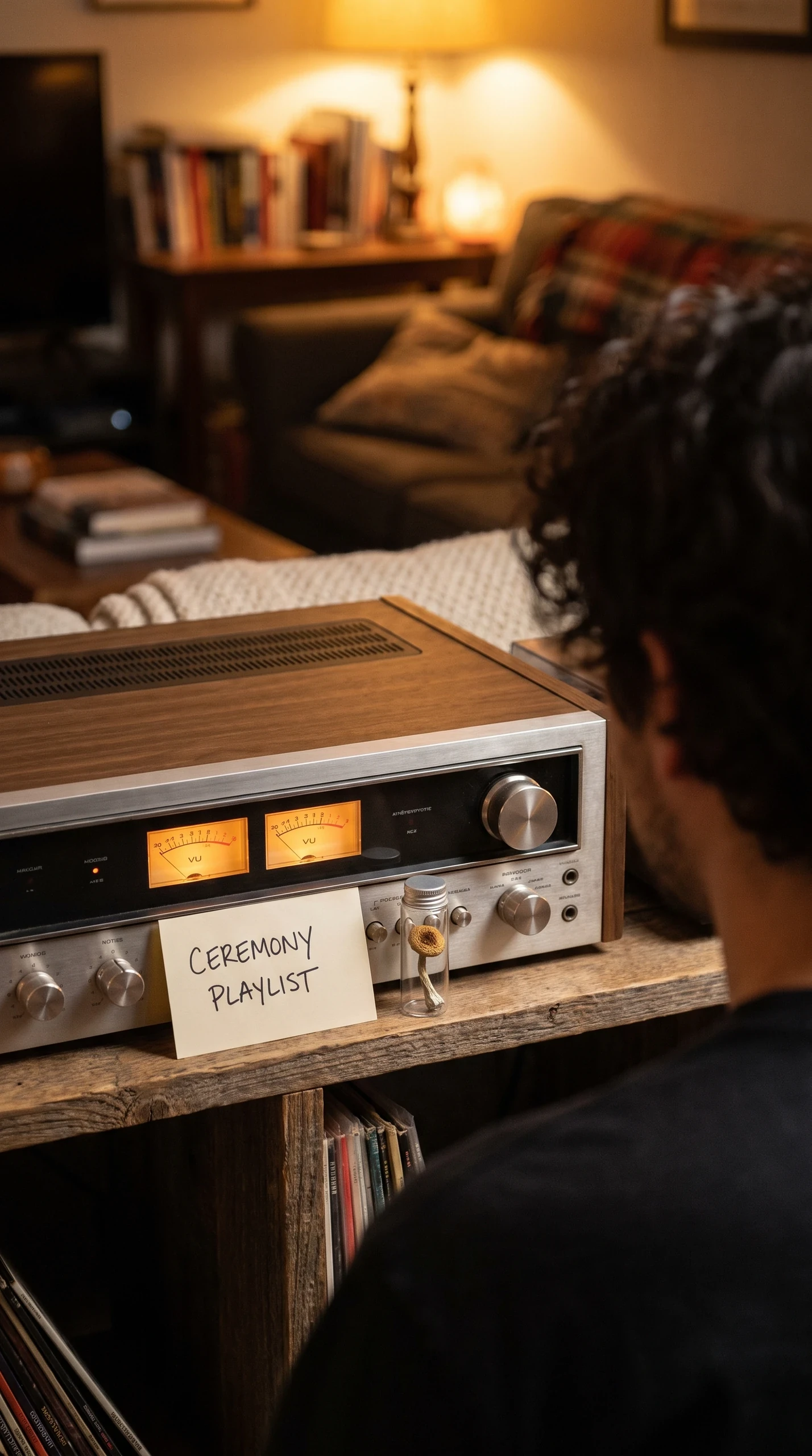
Some ceremonial operators claim their model is more effective because it incorporates elements that clinical settings exclude. Maybe. The data is not there yet. What is clear is that context changes the experience, and ceremony is context-building taken to an extreme. Every element, from the arrangement of cushions to the words spoken before ingestion, signals that this is not recreational use. Whether that framing enhances therapeutic benefit or just makes people feel like they got their money's worth is difficult to tease apart.
The commercialization of ceremony also creates incentives that research avoids. A retreat's reputation depends on participants reporting breakthroughs, so the structure nudges you toward that interpretation. Integration sessions, where you debrief the experience, often steer you toward finding meaning even in confusing or uncomfortable sessions. That is not dishonest. It is hermeneutics, the practice of making meaning from experience. Ceremony provides the frame. Golden Teacher provides the catalyst. You provide the story.
The Mushroom That Ended Up in the Role
Golden Teacher did not earn its place in modern ceremony through spiritual lineage or unique pharmacology. It earned it by being available, reliable, and aesthetically compatible with the ceremonial frame that psychedelic culture borrowed and adapted. The name helped. The widespread cultivation helped. The timing, arriving in the culture just as decriminalization efforts and retreat models made ceremonial psilocybin viable, helped most of all.

There is something absurd about elevating a cultivar with such mundane origins to ritual status. There is also something very human about it. We build ceremony around what we have access to, not around what myth says we should use. Golden Teacher fit the need. It grew well, dosed predictably enough, and looked the part. Whether future ceremony will still center on this cultivar, or whether new synthetics or other strains displace it, depends on infrastructure and fashion as much as anything intrinsic to the mushroom.
For now, if you attend a psilocybin ceremony, the odds are good that Golden Teacher is what you will ingest. Not because it is the sacred mushroom. Because it is the convenient one, and convenience shapes ritual as much as anything else when tradition has to be built rather than inherited.
Frequently asked questions
Is Golden Teacher traditionally used in indigenous ceremony?
Why is Golden Teacher common in retreat and ceremony settings?
Does ceremonial context make Golden Teacher more effective?
What should someone know before attending a Golden Teacher ceremony?
How does ceremonial use differ from therapeutic or clinical psilocybin sessions?
Ready to apply what you've learned?
Browse lab-tested magic mushrooms, edibles, microdose capsules and teas — shipped discreetly across the United States.