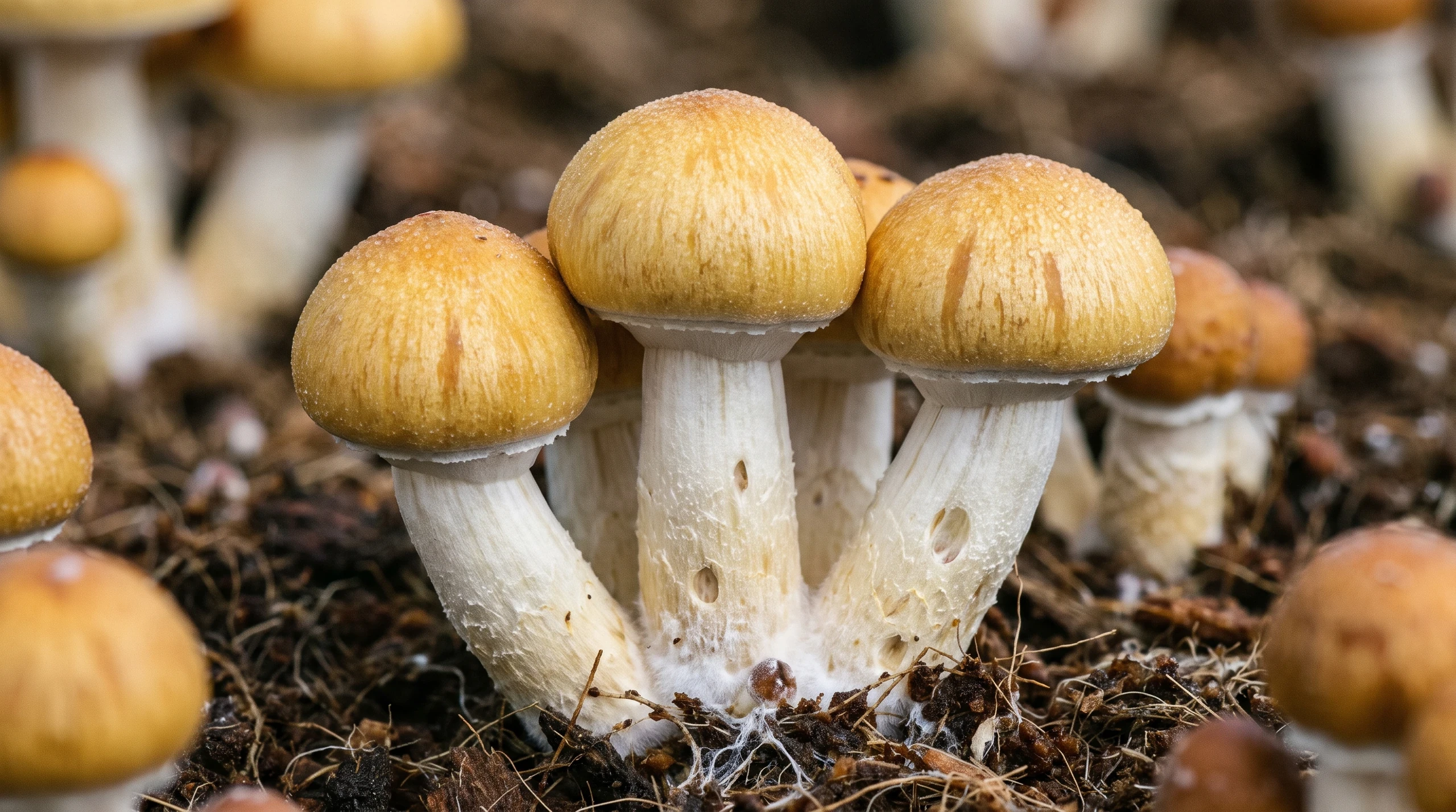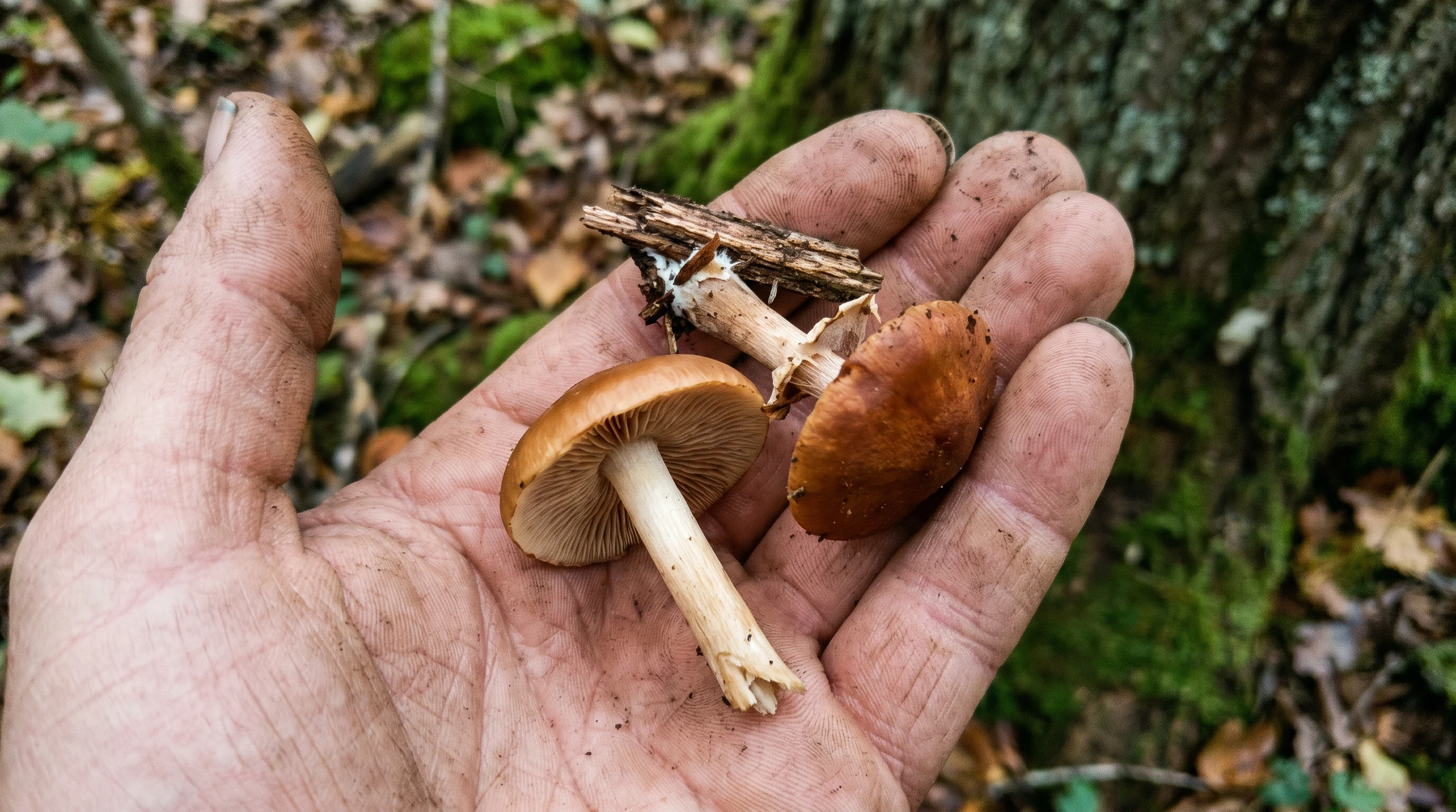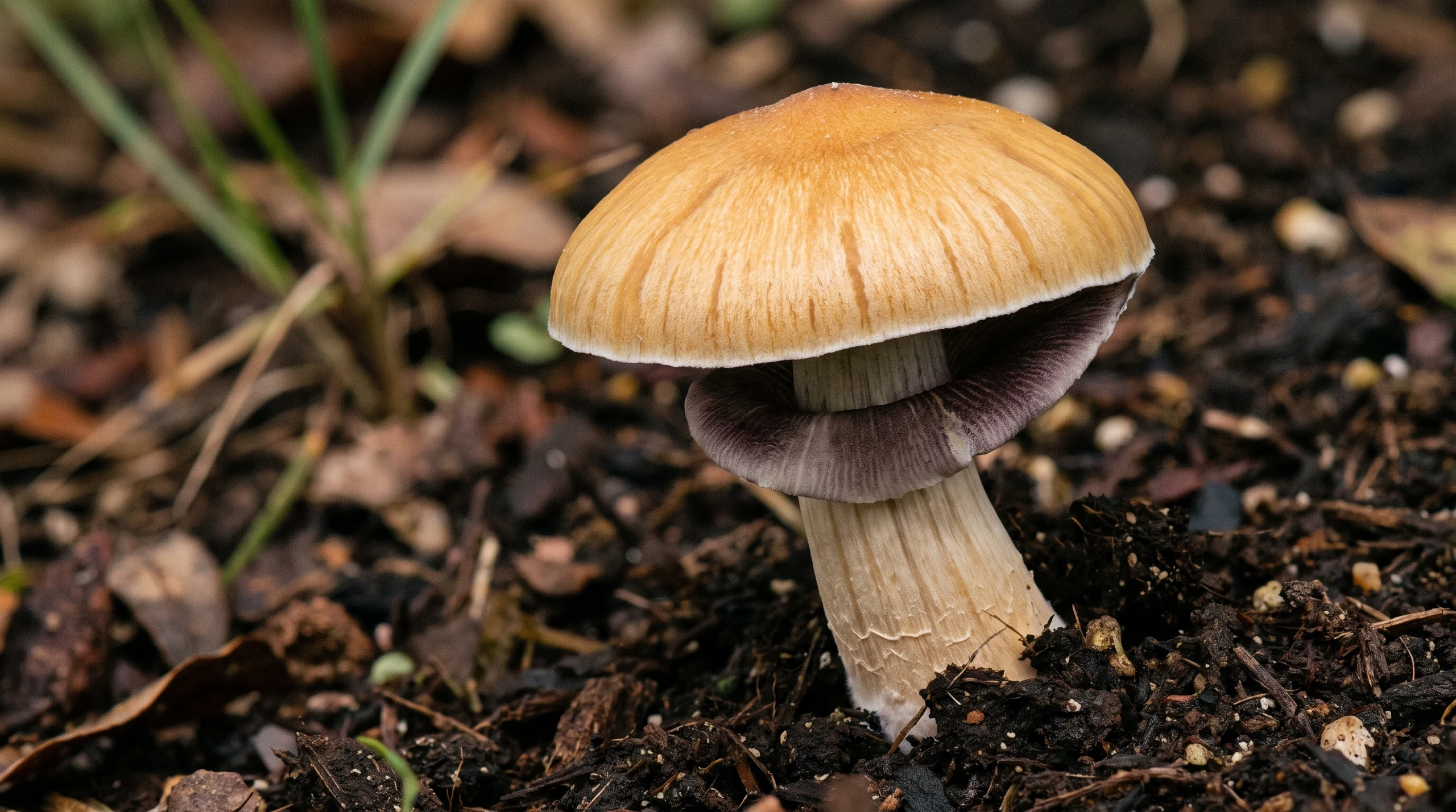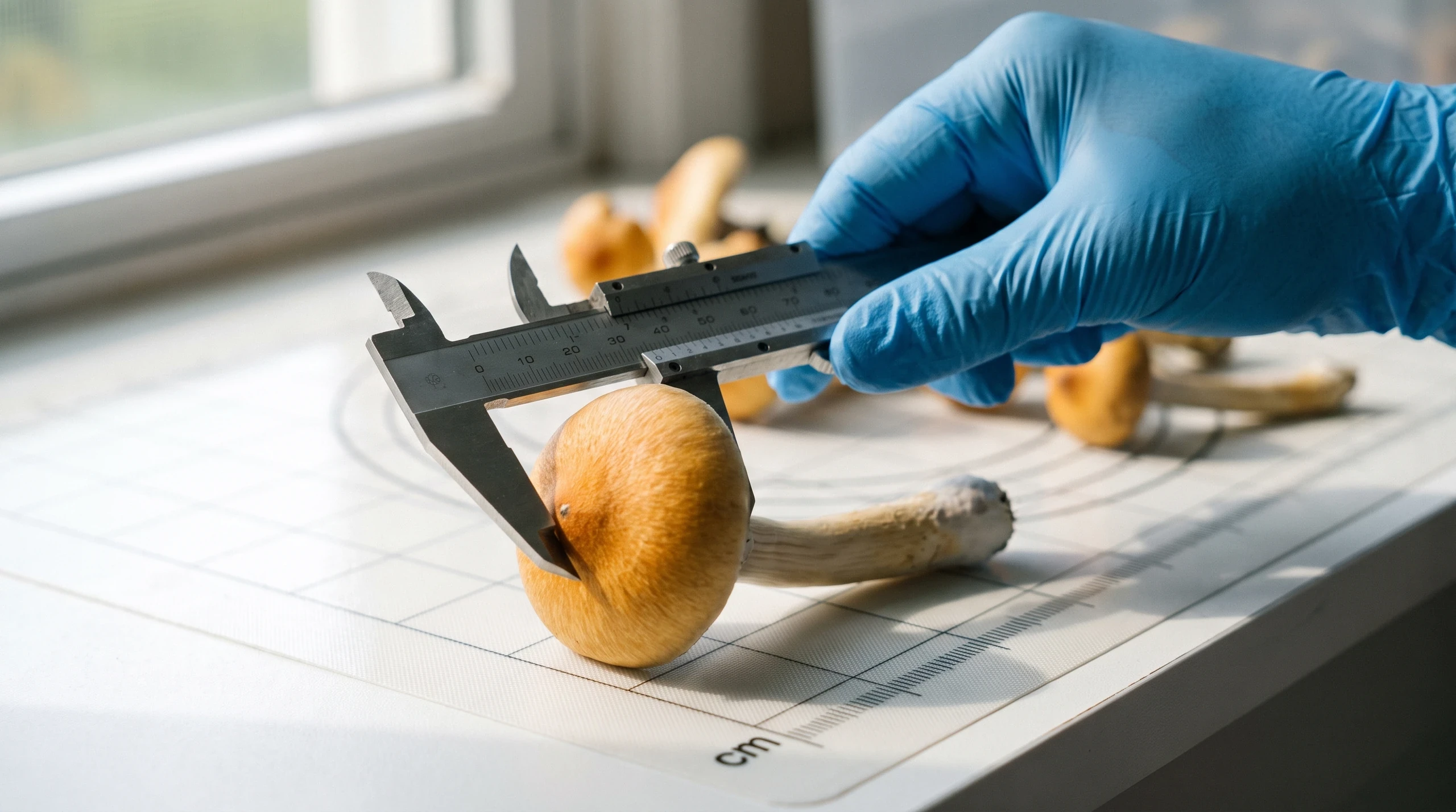
Every few months another headline drops claiming psilocybin cured depression or rewired someone's brain, and buried somewhere in the fine print is a sample size of twelve people, all of them white, all of them already in therapy, none of them taking the mushroom in any way that resembles how you might actually encounter a Golden Teacher outside a lab. The research is real, the findings often are too, but the path from a controlled trial to your lived experience is longer and stranger than the press release admits. What follows is not a survey of what the science has found. It's a map of what the science can't see, where the method breaks down, and why a study on one of the world's most popular cultivars still leaves most of the important questions unanswered.
The Unit of Evidence Is Smaller Than You Think
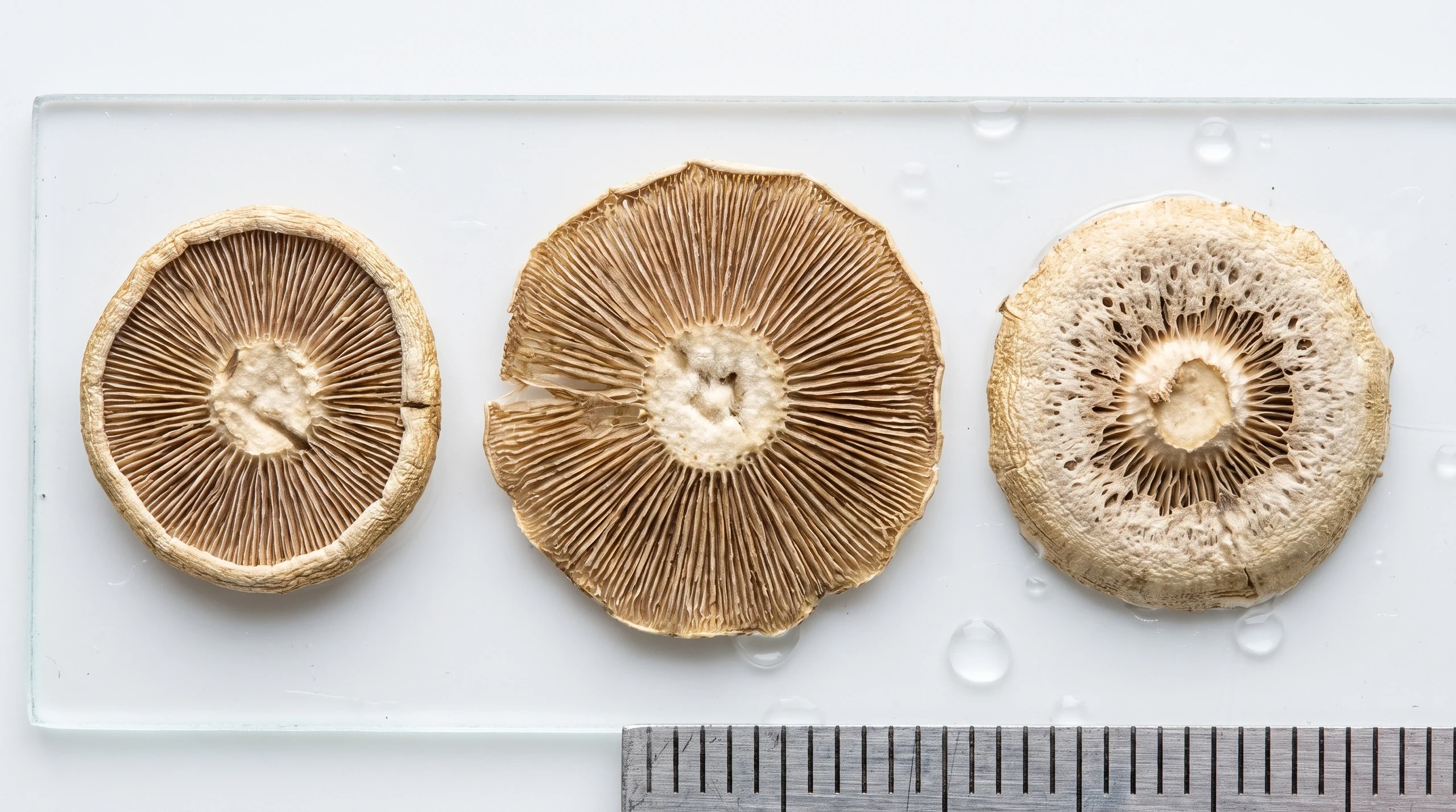
When you read that researchers gave participants "psilocybin," you're not reading about Golden Teacher. You're reading about a synthetic compound, produced in a pharma lab, delivered in a gelcap at a dose measured to the milligram. The molecule is identical to what's in the mushroom, but the delivery system is not. A cultivated fruiting body is a biological object, not a chemical isolate. Potency varies by flush, by grow conditions, by the part of the cap you happen to eat. Published figures put psilocybin content in cubensis anywhere from 0.2 to 1.0 percent dry weight, and anecdotal reports from growers who've sent samples to labs suggest Golden Teacher often lands in the middle of that range, though the variance within a single grow can be wide enough to matter.
The studies that do use whole mushrooms, rare as they are, seldom specify cultivar. When they do, the preparation is usually a powdered extract standardized to a target dose, which collapses the question of strain back into the question of molecule. This is fine if what you care about is isolating the active agent. It is less fine if what you want to know is whether the thing people actually grow and consume behaves the way the literature says psilocybin behaves. The answer is probably yes, most of the time, but "probably" and "most of the time" are not the same as "established."
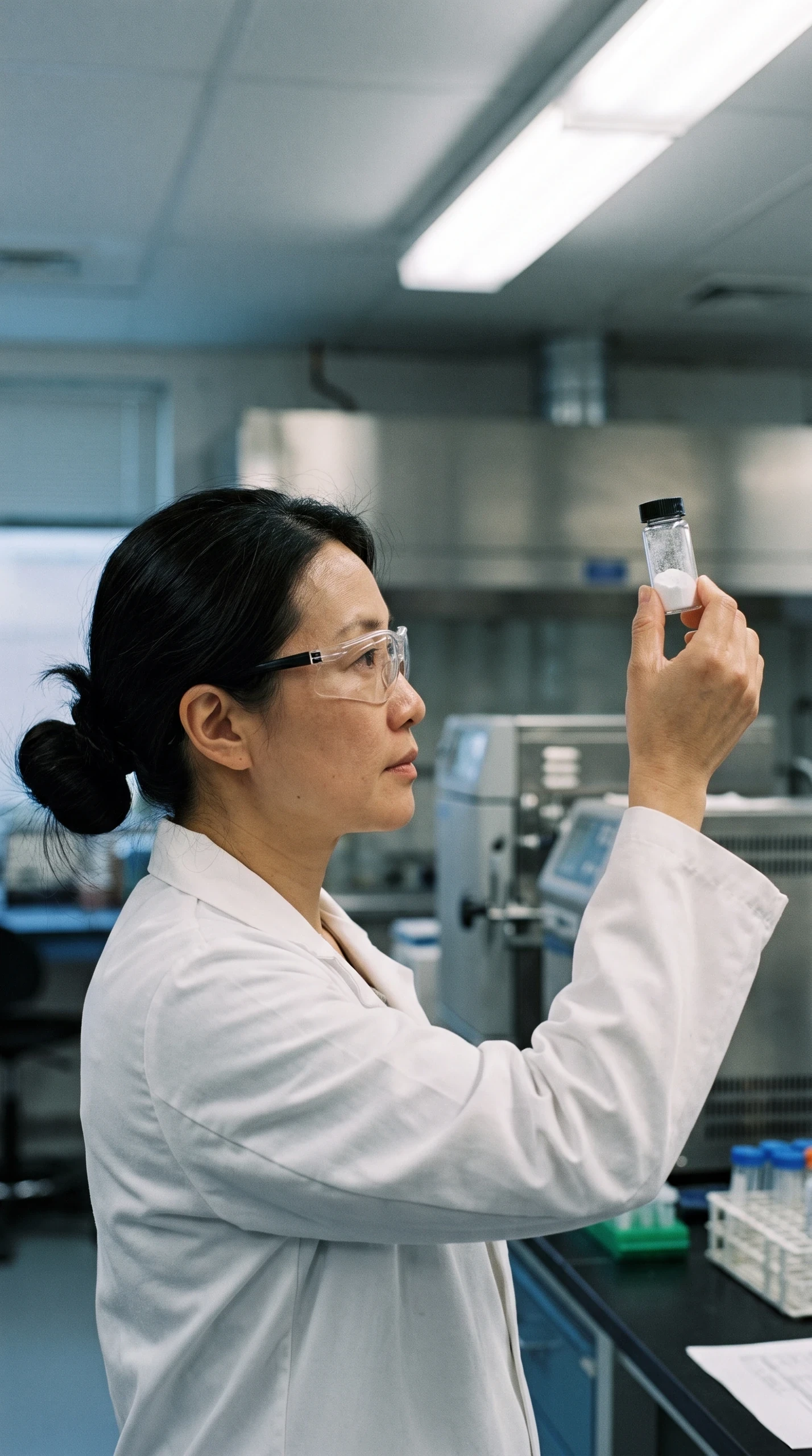
A 2021 paper in Drug Testing and Analysis documented the alkaloid variability across Psilocybe cubensis samples and found that even sibling fruits from the same cluster could differ by twenty percent or more. The study did not break down results by named cultivar, so whether Golden Teacher is more or less stable than, say, a Penis Envy variant remains unknown. The literature treats cubensis as a monolith when it's really a collection of domestic lines with different histories. The science has not caught up to the taxonomy the growers use.
Blinding Is a Polite Fiction
Most drug trials rely on a simple trick: half the participants get the real thing, half get a sugar pill, and nobody knows which is which until the data is in. This keeps expectations from contaminating the results. Psychedelics break the trick. If you've ever taken psilocybin, or even if you haven't, you will know within ninety minutes whether you got the placebo. The onset is not subtle.
Researchers have tried to get around this with "active placebos," compounds that produce some noticeable effect without the psychedelic payload. Niacin is a common choice because it causes flushing. Methylphenidate has been used because it's stimulating. Neither is convincing if the real dose is high enough to produce closed-eye visuals or disrupt your sense of where your body ends. A 2022 review in Psychopharmacology surveyed blinding integrity across twenty-three psilocybin trials and found that participants guessed their condition correctly in over eighty percent of high-dose sessions. The authors concluded that blinding in this context is "largely unsuccessful." The studies still call themselves double-blind because the protocol says they are. The term has become a procedural courtesy, not a description of what actually happened.
Golden Teacher sessions in particular, if they follow the common homebrew dose range of two to three grams dried, are not going to fool anyone into thinking they took a control. The question this raises is not whether the therapeutic effects are fake. The question is how much of the measured effect is the drug and how much is the certainty, the ritual, the fact that you prepared for this and it's happening now. Expectation is not noise in a psychedelic trial. It is part of the signal. The method does not know how to separate them, so it pretends it did.
Set and Setting Are Not Controlled Variables
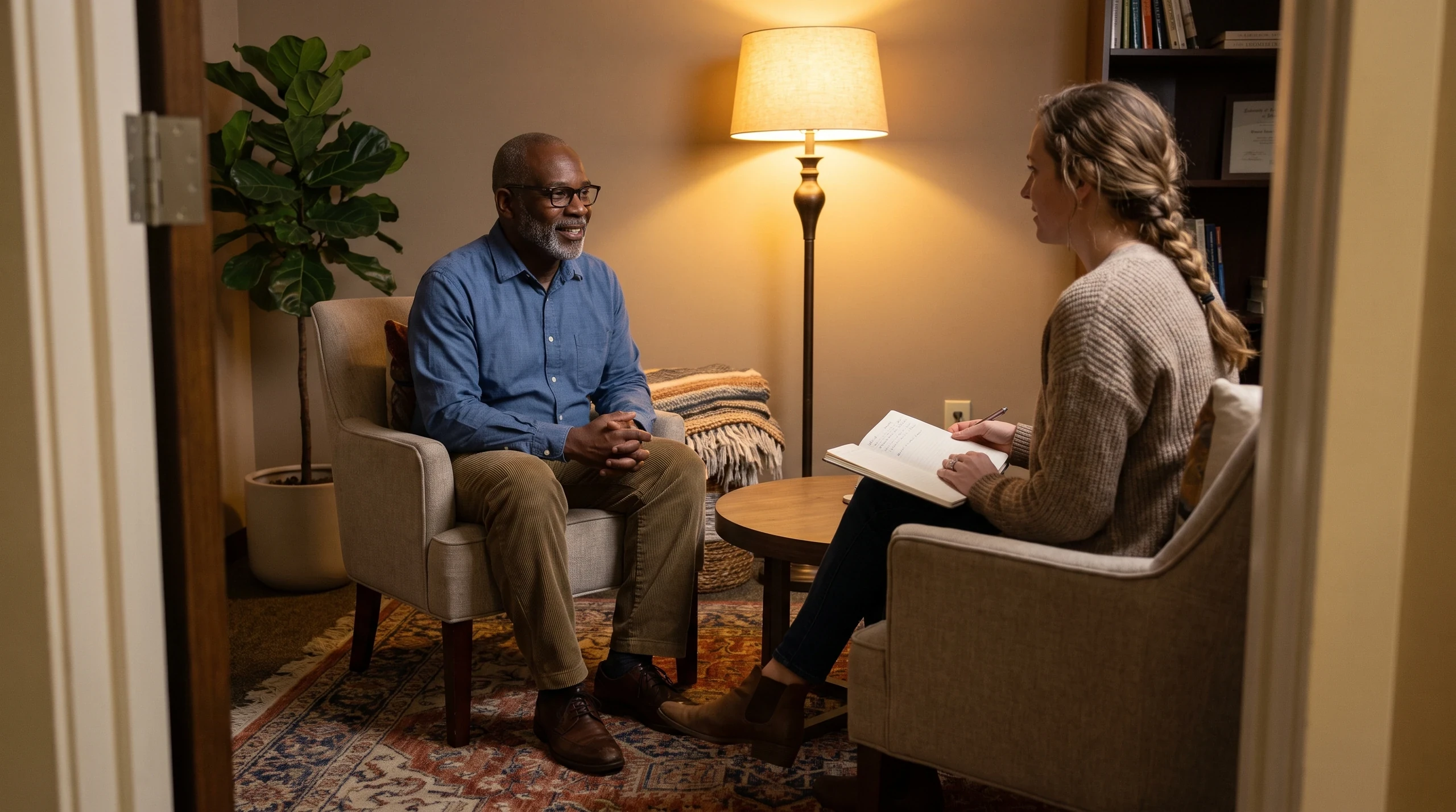
Every responsible guide to psilocybin use, including the ones written for Golden Teacher specifically, will tell you that set and setting matter as much as the dose. Your mental state going in, the environment you're in, the people around you, the music, the lighting, the degree to which you feel safe. The clinical trials know this. They build elaborate protocols around it: trained therapists, carefully curated playlists, rooms decorated to feel warm and non-clinical, preparation sessions before the dose and integration sessions after. The environment is engineered to produce the conditions under which psilocybin seems to help.
Then the paper reports the outcome as if it were a simple drug effect. The title says psilocybin reduced depression scores, not psilocybin plus eight hours of therapeutic support in a room that looked like a nice living room with a therapist who spent three sessions establishing trust. The method requires isolating the independent variable, but in this case the independent variable is a bundle of inputs delivered simultaneously. You cannot run the experiment with psilocybin and no support, because ethics boards will not let you, and even if they did, the lack of support would itself be a setting choice.
Some researchers have started to argue that set and setting should be treated as part of the intervention, not as a nuisance variable to control away. That would make the findings more honest, but it would also make them less generalizable. If the therapeutic effect depends on the presence of a trained guide and a safe room and six months of follow-up, then what you have learned is that a very expensive and resource-intensive procedure works under ideal conditions. You have not learned what happens when someone takes three grams of Golden Teacher in their apartment on a Saturday because they read that it might help.
The science does not forbid that use case. It just has nothing to say about it.

The Sample Does Not Look Like the Population
Clinical trials recruit narrow populations by design. Participants are screened for psychiatric history, current medications, physical health, and a dozen other factors that might confound the results or introduce risk. The people who make it through are, by definition, not representative of the people most likely to seek out psilocybin on their own. They are healthier, more stable, more compliant with protocol. A significant portion of them are white, educated, and already engaged in some form of therapy. The trials are studying a best-case cohort under best-case conditions, which is reasonable if what you want is to establish basic safety and efficacy. It is less reasonable if you want to know what happens in the wild.
Golden Teacher has a reputation in grower and user communities as a beginner-friendly strain: reliable, moderate in strength, less prone to the aggressive body load or psychological intensity that makes some cubensis varieties unpleasant for first-timers. That reputation is based on distributed anecdotal experience, not on controlled comparison. No published study has compared subjective effects across cultivars, and the studies that do exist rarely specify which cultivar, if any, was used. The people participating in trials are also rarely first-timers. They've been screened, consented, and prepared. The experience they report may not map onto the experience of someone who grew a kit in a closet and decided to try it with minimal context.

Diversity in trial populations is improving, but slowly. A 2024 analysis published in eClinicalMedicine found that fewer than fifteen percent of participants in North American psychedelic trials identified as non-white, despite the fact that rates of depression and PTSD, two of the primary targets for psilocybin research, are higher in many marginalized communities. Extrapolating from a sample that does not reflect the population is a textbook error. The field keeps making it anyway.
What Gets Measured Is What Fits the Instrument
Depression trials rely heavily on a questionnaire called the HAM-D, the Hamilton Depression Rating Scale. It's a seventeen-item interview administered by a clinician, and it's been the standard for decades. Participants rate symptoms like depressed mood, guilt, insomnia, and loss of interest in usual activities. When a psilocybin study reports that depression scores dropped by twelve points, it means the HAM-D score dropped by twelve points. That may or may not correspond to what you think of as "feeling better." The instrument measures what it was designed to measure in 1960, which is a very specific model of what depression looks like.
Some of the effects people report from Golden Teacher experiences, sustained or otherwise, do not fit neatly into a seventeen-item scale. A sense of reconnection to something larger. A collapse of the gap between observer and observed. Relief from a kind of existential claustrophobia that does not have a line on the HAM-D. These might be downstream causes of symptom relief, or they might be orthogonal effects that matter to the person but not to the clinical endpoint. The science is not equipped to tell the difference. It records what the instrument can see.
The same is true for neuroimaging. FMRI studies report changes in default mode network connectivity, alterations in amygdala response, increased communication between brain regions that don't usually talk to each other. The images are striking and the findings are real, but a correlation between blood oxygen levels in a scanner and the felt sense of having been changed by the experience is still a correlation. The map is not the territory. The scan is not the trip.
Replication Is Expensive and Rare
A finding is not truly established until it has been independently replicated, ideally more than once, ideally in different labs with different populations. Psychedelic research is still young enough and expensive enough that replication is the exception, not the rule. Most of the landmark findings, the ones that make headlines, rest on one or two trials with sample sizes in the low double digits. That is enough to justify further study. It is not enough to settle the question.

Golden Teacher, specifically, does not appear by name in any peer-reviewed study indexed in PubMed as of this writing. Psilocybe cubensis appears in taxonomic and ethnobotanical papers, in a handful of case reports, and in chemical assays measuring alkaloid content, but almost never in clinical trials. The trials use pure psilocybin or unnamed mushroom extracts. The gap between "we know psilocybin does X" and "we know Golden Teacher does X" is filled by assumption. The assumption is probably safe, but it has not been tested.
Even the well-replicated findings come with caveats. A 2023 meta-analysis in JAMA pooled results from six trials of psilocybin for major depressive disorder and found a significant effect at one month post-treatment, but the effect size shrank at three months and the confidence interval widened. Durability is still an open question. So is optimal dosing. So is frequency of administration. The answers will come, eventually, but right now the literature is still scaffolding.
The Long Tail Is Not Captured
Clinical trials run for fixed periods. Participants are dosed, monitored, assessed at regular intervals, and then the trial ends. Follow-up is usually measured in weeks or months, occasionally a year. Outcomes that take longer to manifest, or that only become apparent when the initial effects have worn off, fall outside the observation window. The same is true for delayed adverse events.

There are anecdotal reports, scattered across forums and trip databases, of people who felt worse months after a psilocybin experience, not because of the acute effect but because of what it surfaced or what it changed. Others report benefits that did not fully emerge until the second or third year. These are hard to study. They require longitudinal designs, retention of participants over long periods, and a willingness to track outcomes that were not specified in the original protocol. Researchers do what they can, but the constraints are real.
Golden Teacher's reputation as a cultivar is built on accumulated user reports spanning more than two decades. That dataset is vast, uncontrolled, and unreliable by the standards of clinical evidence, but it captures a time horizon no trial has matched. The tension between the rigor of the lab and the scope of lived experience is not a problem the method can solve. It is a problem the method creates.
Where the Map Ends
The point of this is not that the research is bad or that the findings are wrong. The point is that the research is doing a specific thing, under specific constraints, and the result is a specific kind of knowledge. It tells you what happens to a small group of people under conditions you will probably never replicate. It does not tell you what will happen to you. It does not tell you whether Golden Teacher behaves the way the synthetic molecule behaves. It does not account for variance in potency, for the role of ritual, for the effects that fall outside the questionnaire, for the long tail, for the population that did not get screened into the trial.

None of this means you should ignore the science. It means you should read it with the grain instead of against it, which is to say you should notice what it looked at and what it didn't. The absence of data is not the same as negative data. The things the studies can't tell you are not refutations. They are blanks on the map. Some of them will be filled in. Some of them are maybe not fillable by this kind of method. The literature is a floor, not a ceiling. What you do with the space above it is a different kind of question.
Frequently asked questions
Can clinical trials on synthetic psilocybin tell us anything useful about Golden Teacher mushrooms?
Why don't researchers specify which mushroom cultivar they use in studies?
Are the people in psilocybin trials representative of people who use Golden Teacher recreationally or for self-therapy?
If blinding doesn't work in psychedelic trials, does that invalidate the findings?
How long do the effects of psilocybin last according to research, and does that match user reports?
Ready to apply what you've learned?
Browse lab-tested magic mushrooms, edibles, microdose capsules and teas — shipped discreetly across the United States.