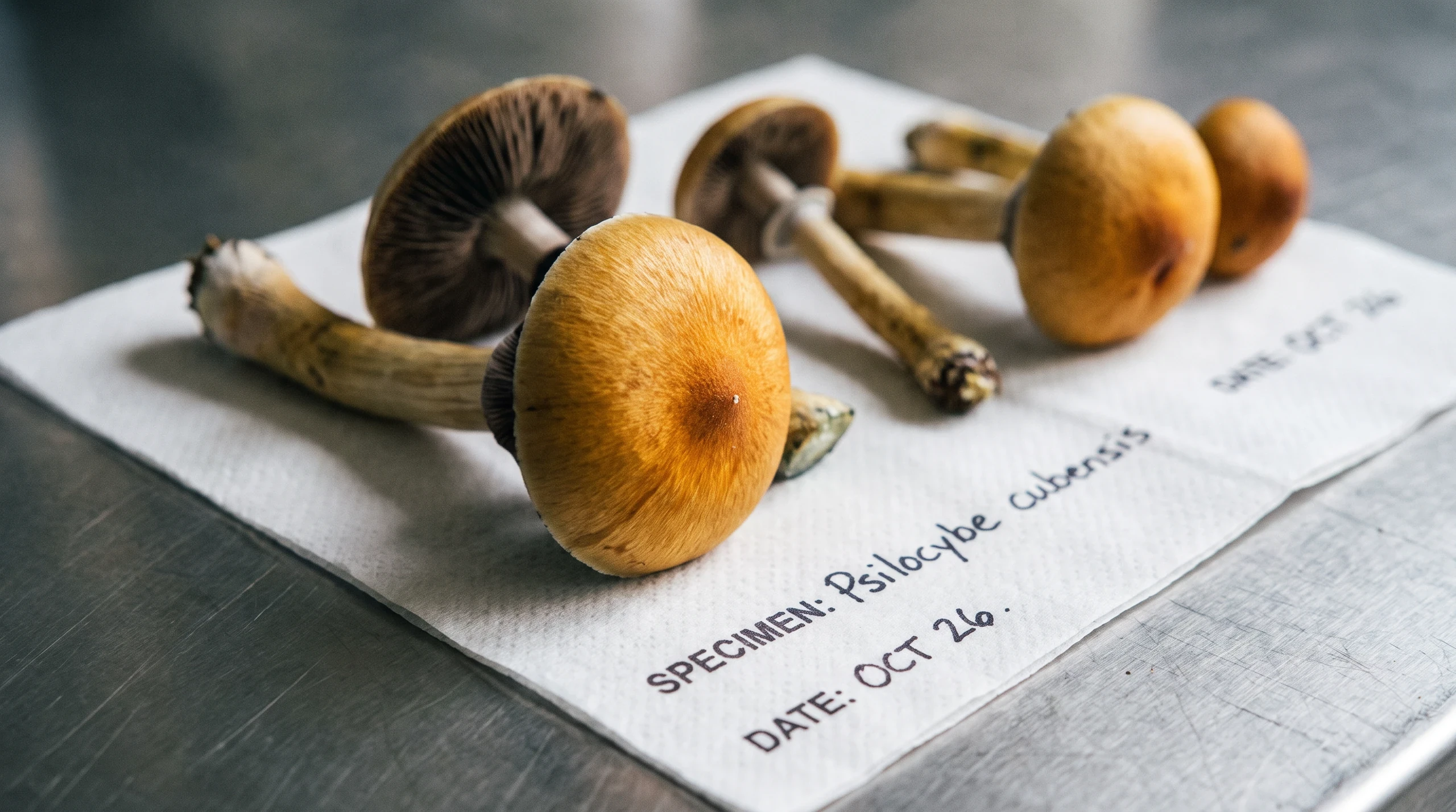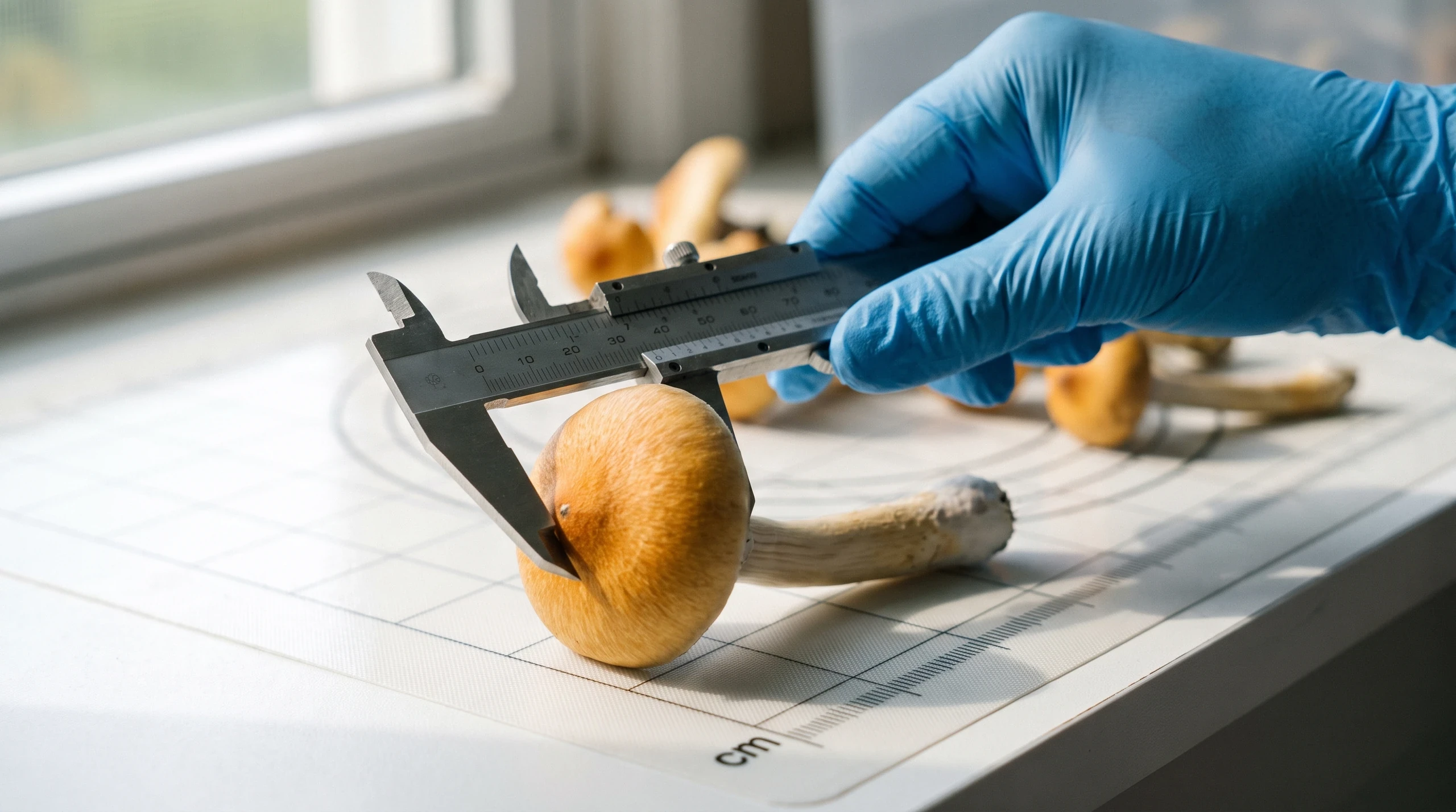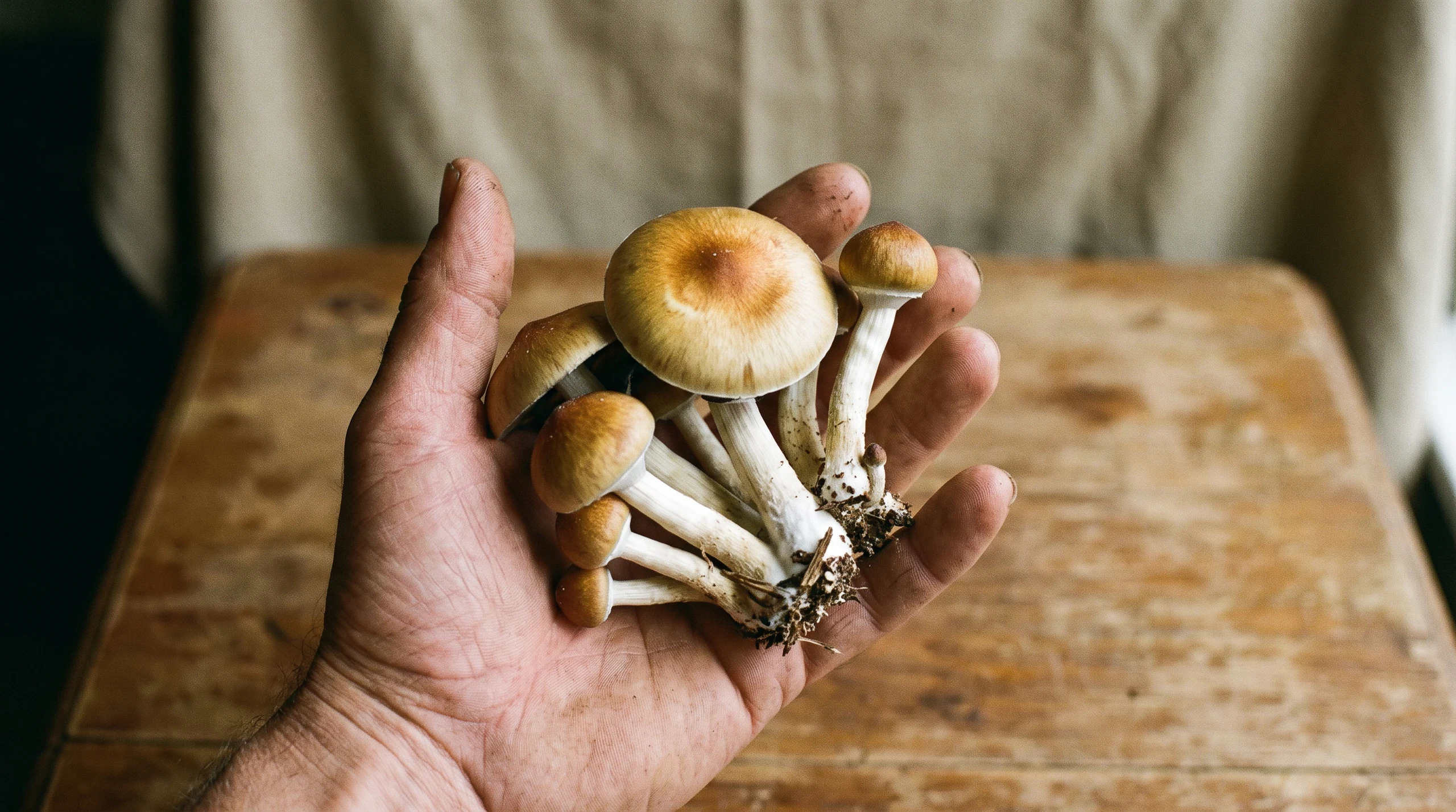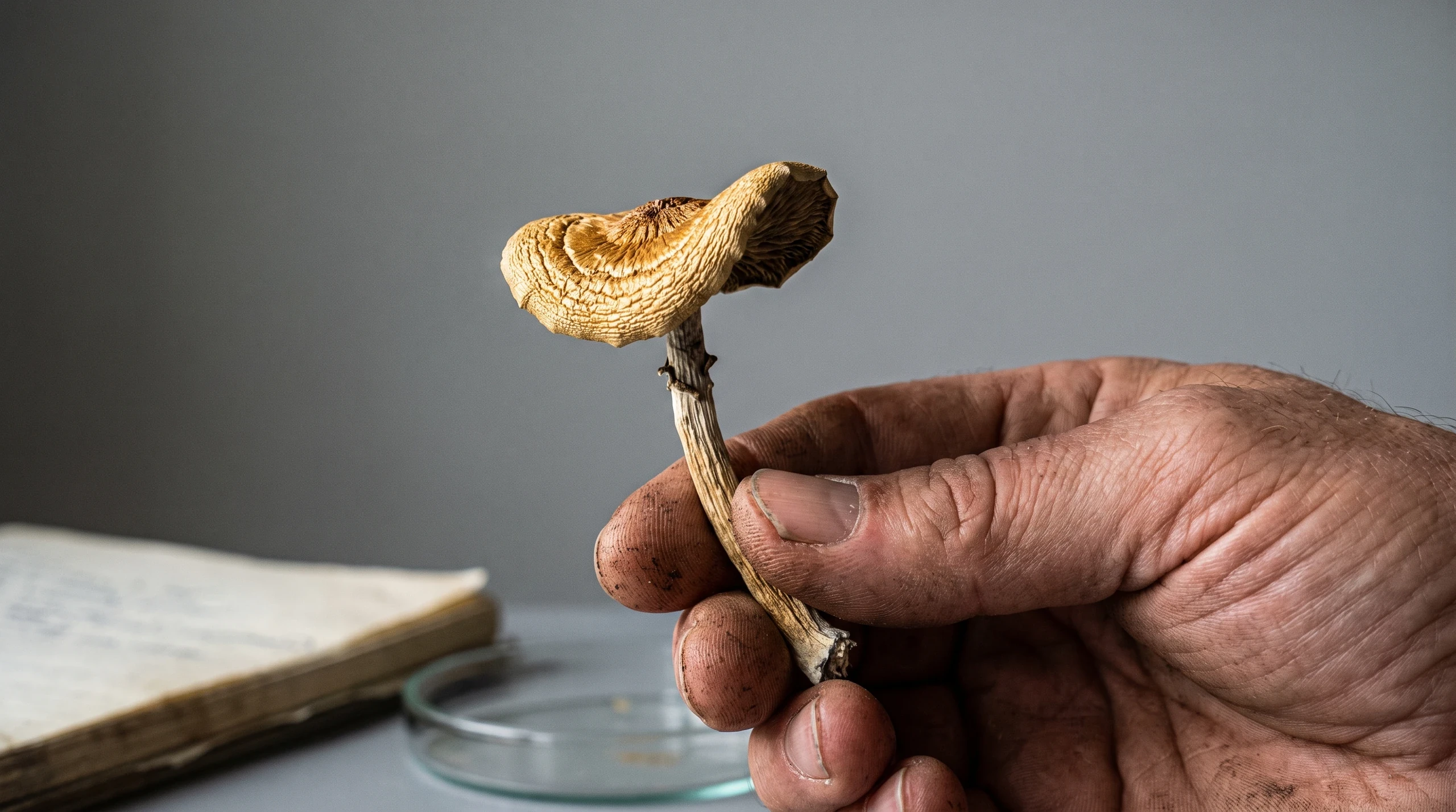
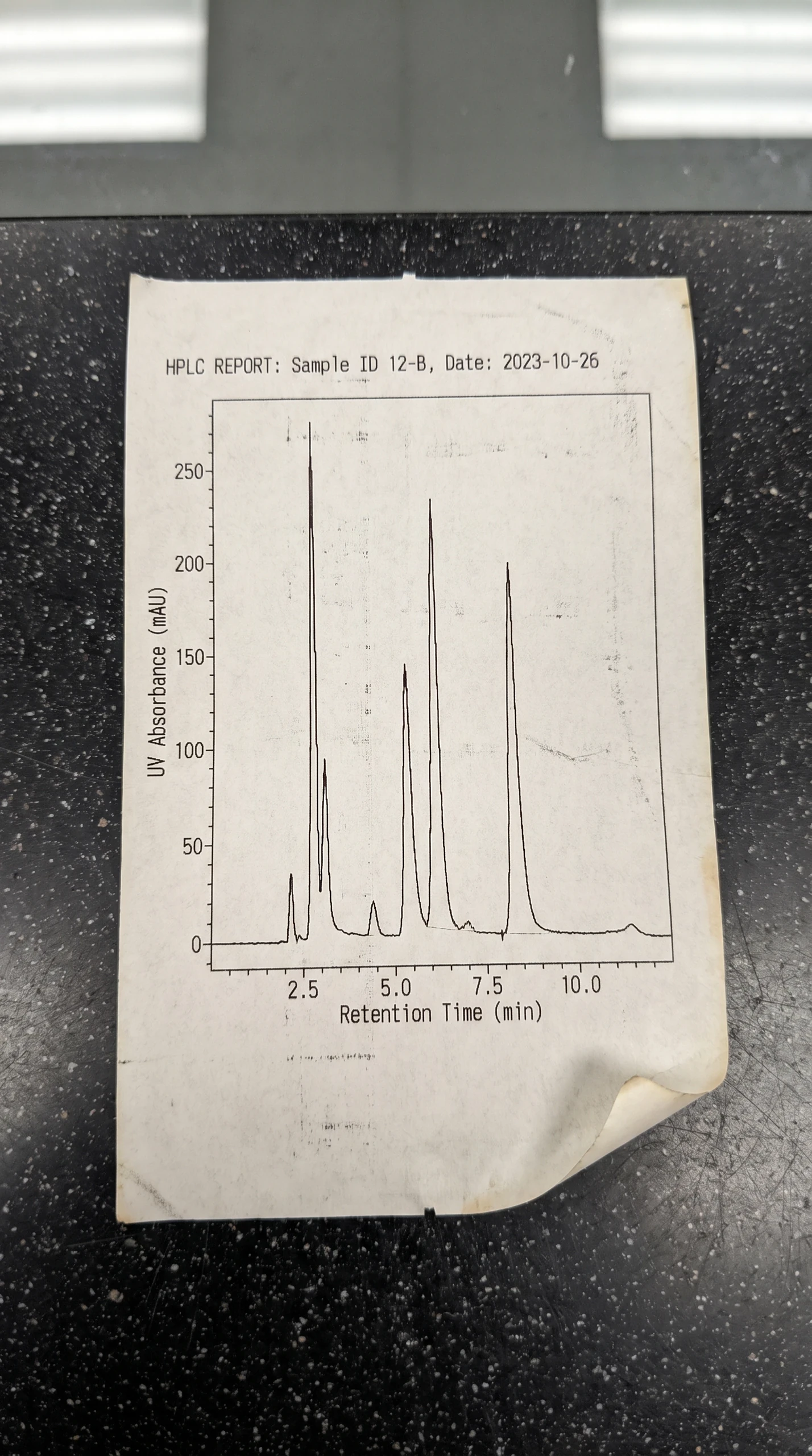
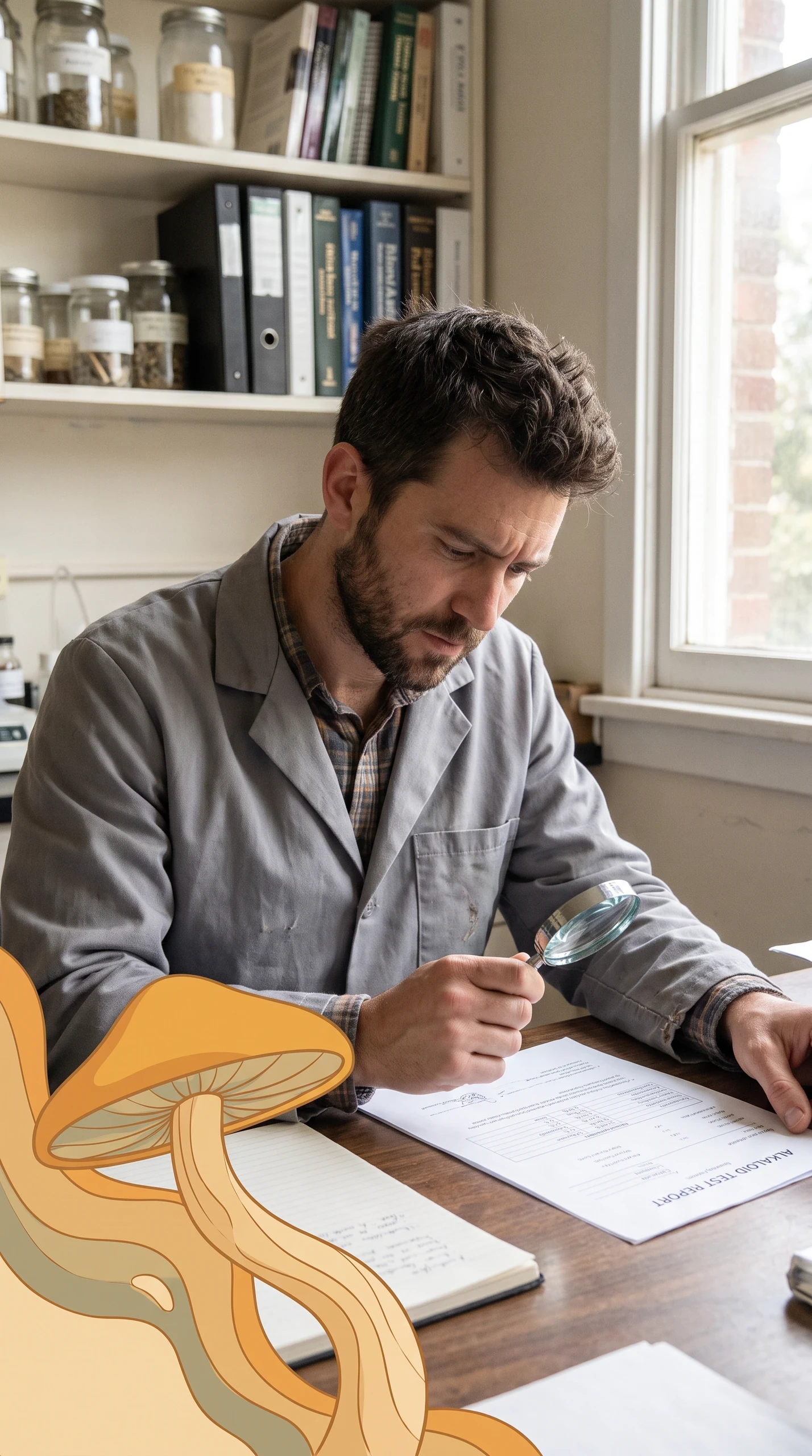
You sent a dried Golden Teacher cap to a testing lab and got back a PDF with two percentages, a chromatogram squiggle, and a disclaimer paragraph in six-point type. The percentages look precise, three decimal places, and you still have no idea what you're holding. Welcome to the gap between a number and knowledge. Most people stop at the number. The report is designed that way. But the number is the end of a long, assumption-laden process, and unless you understand what happened before the lab spit out that PDF, the number is closer to a horoscope than a measurement. This is about learning to read the whole thing, not just the bottom line, because Golden Teacher potency varies enough that treating a report as gospel gets people into trouble.
What an Alkaloid Report Actually Measures
An alkaloid report for Golden Teacher quantifies two compounds: psilocybin and psilocin. Sometimes a third, baeocystin, appears if the lab bothers. That's it. The report does not measure "potency" in any experiential sense, does not tell you what the trip will feel like, does not account for the other tryptamines and beta-carbolines floating around in the tissue. It measures how much of two specific molecules were detected in the specific sample you sent. The sample was probably a single cap, maybe a stem, maybe a crumbled mix. The detection method, usually high-performance liquid chromatography or HPLC, separates molecules by how they move through a column under pressure, then identifies them by comparing retention times and UV absorption signatures against known standards. The resulting percentages, psilocybin 0.63% and psilocin 0.08% for instance, represent mass fractions. If you sent a gram of dried mushroom and the report says 0.63% psilocybin, the lab detected 6.3 milligrams of that molecule. Psilocybin is a prodrug, inert until your gut enzymes cleave off a phosphate group and turn it into psilocybin's active form, psilocin. Psilocin is what crosses the blood-brain barrier and binds serotonin receptors. The report gives you both numbers because psilocin degrades faster than psilocybin during storage and handling, so a high psilocin reading sometimes signals fresh material or poor storage, and a low one means nothing in particular.
The HPLC Black Box and What It Hides
The lab probably used HPLC because it's fast, relatively cheap, and good enough for the cannabis testing infrastructure that psilocybin piggybacked onto when decrim laws opened a market. Chromatography techniques rely on a basic trick: push a dissolved sample through a tube packed with silica beads, and different molecules stick and release at different rates. A detector at the end watches for UV light absorption at a specific wavelength, typically 220 or 267 nanometers for psilocybin, and records a peak when the molecule washes past. The height or area under that peak, compared to a calibration curve made with pure reference standards, gives you a concentration. This works if your sample is clean, your standards are fresh, your column isn't fouled, and your method was validated against a matrix similar to mushroom tissue. Most of those ifs go unmentioned in the report. The method might be a published one from the Journal of Chromatography or a homebrew the lab cobbled together and never published. You don't know. The reference standard could be pharmaceutical-grade psilocybin from Sigma-Aldrich or something synthesized in-house with no third-party certificate. The calibration curve could have been run that morning or six months ago. The report will not tell you, because the cannabis testing model treats the lab like an oracle and the customer like someone who just wants a number to print on a label.
Dry Weight, Fresh Weight, and the Conversion Everybody Gets Wrong
Every alkaloid percentage you see is reported on a dry-weight basis, meaning the lab dried your sample to remove water before measuring. Golden Teacher mushrooms are about 90% water when fresh. Dry them and the same mass of psilocybin is now packed into one-tenth the weight, so the percentage climbs by a factor of ten. If someone hands you a report that says 0.6% psilocybin dry weight, that same tissue was roughly 0.06% when fresh. This matters because people dose by weight, and if you misread which basis the report used, you'll dose ten times higher or lower than you meant. Most reports label it, but not all. The giveaway: dry-weight percentages for psilocybin in Psilocybe cubensis, the species Golden Teacher belongs to, typically run 0.3% to 1.5%. Fresh-weight percentages run 0.03% to 0.15%. If you see a number and it's not labeled, you reverse-engineer it from plausibility. A report claiming 8% psilocybin is either fresh-weight mislabeled or someone sent in pure extract. Context clues become your fact-check.
Sample Prep and the Variance No One Talks About
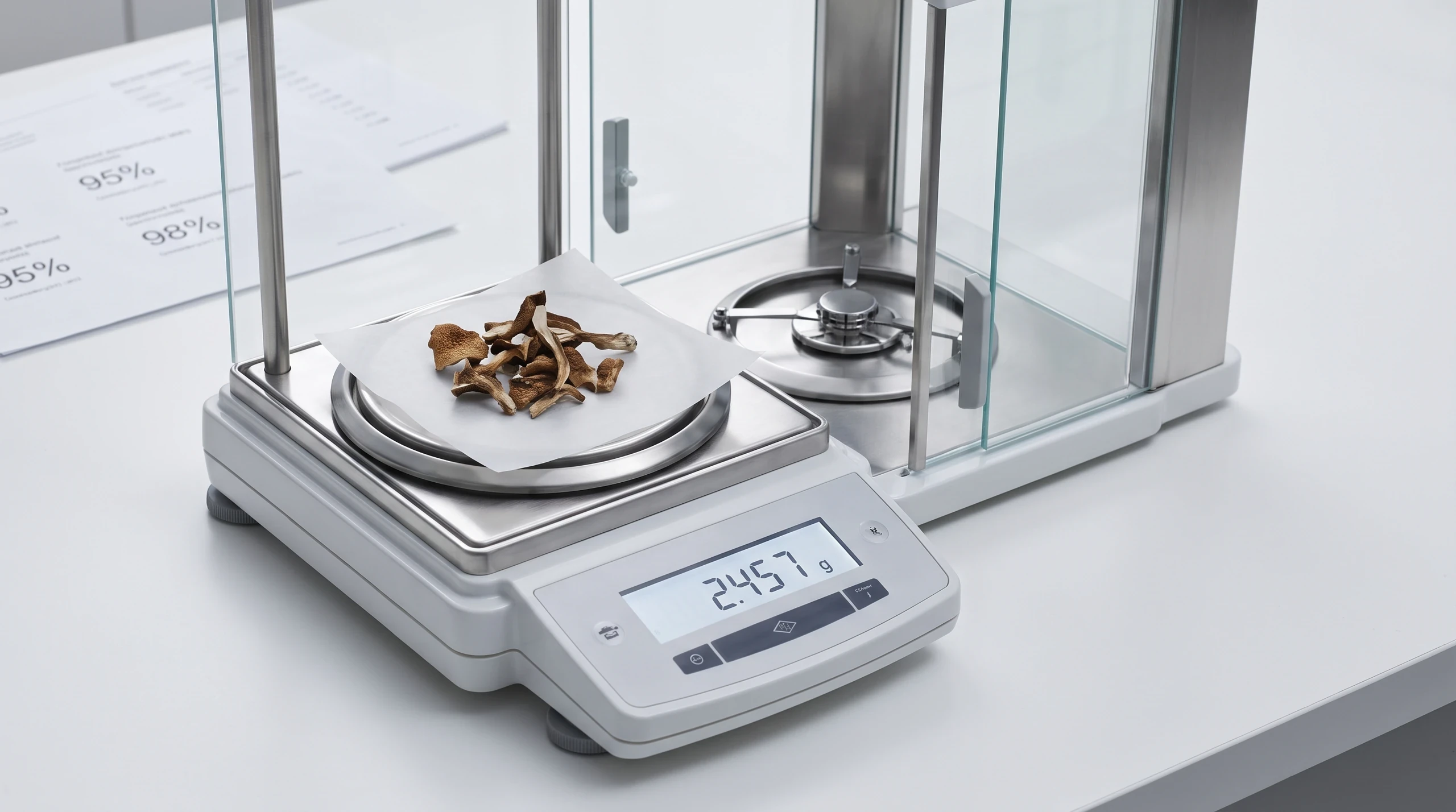
Before the mushroom goes into the HPLC, someone ground it into powder, weighed a few milligrams, dissolved it in methanol or acidified water, filtered it, maybe diluted it. Each step introduces error. Psilocybin concentrations vary cap to cap, cap to stem, and even within a single cap from the margin to the center. Caps generally contain more than stems. Younger mushrooms skew differently than older ones. If you sent a single cap and the lab homogenized it well, the report reflects that cap. If you sent a stem, it reflects the stem, which could be half the psilocybin of the cap from the same fruit. If you sent a mix and the lab took a subsample without mixing it first, the report reflects whatever chunk ended up in the vial. Published studies on psilocybin homogeneity in cubensis show coefficients of variation around 20 to 30%, meaning if the true average is 0.6%, repeated measurements might scatter from 0.42% to 0.78%. The report prints 0.634%, three decimals, which gives the number a false precision. Those trailing digits are noise. The meaningful range is "around 0.6%, maybe higher, maybe lower."
What the Report Doesn't Measure: Stability, Degradation, and the Age Question
Psilocin degrades under light, heat, and oxygen. Psilocybin is more stable but not immortal. If you stored your Golden Teacher in a jar for six months before testing, the report shows what's left now, not what was there at harvest. If the lab left the sample sitting in methanol for a week before running it, same problem. The report has no timestamp for when the tissue was picked, how it was dried, how it was stored, or how long it sat in solution. A good lab runs the extract within 24 hours. You don't know if yours did. Some reports include a "sample received" date and a "tested" date, which tells you the minimum lag but not the harvest date. The chemistry literature, available through databases like PubMed Central, suggests psilocin drops measurably within days in poorly stored material, while psilocybin holds for months if kept dark and dry. A report showing high psilocybin and near-zero psilocin could mean the sample is old, was stored well, or was never rich in psilocin to begin with. You can't disambiguate from the numbers alone.
Translating Percentages Into Milligrams and Dose
Here's the arithmetic everyone needs and half the internet gets backward. You have a report: 0.7% psilocybin, 0.1% psilocin, dry weight. You have 2 grams of dried Golden Teacher from the same batch. Total psilocybin: 2000 mg times 0.007 equals 14 mg. Total psilocin: 2000 mg times 0.001 equals 2 mg. Some people add them, some don't. Psilocybin converts to psilocin in your gut at roughly 1:1 molar ratio but psilocin has a slightly lower molecular weight, so 14 mg psilocybin becomes about 11 mg psilocin equivalent after dephosphorylation. Add the existing 2 mg and you get around 13 mg psilocin-equivalent total. That's the number harm-reduction guides use for dose estimation. A common threshold dose is 6 to 10 mg psilocin-equivalent. A moderate dose is 10 to 20 mg. Two grams of this batch would be a moderate experience for most people. But remember the 20 to 30% variance. The cap you actually ate might be 20% hotter or weaker than the one you tested. The report gave you a mean, or more accurately a single point estimate, and the real distribution around that mean is invisible.
When Testing Makes Sense and When It's Theater
Testing one cap from a flush and extrapolating to the whole batch assumes homogeneity the biology doesn't support. If you're microdosing and need consistency, a single report is close to useless unless you homogenize the entire batch into powder and dose volumetrically from that. If you're trying to avoid unexpectedly strong experiences, testing helps if you then account for variance by underdosing your calculation by 20%. If you want a number to put on a product label for legal compliance, the report gives you that, and the regulatory framework usually doesn't care whether the number reflects the whole batch or just the sample. If you're doing it out of curiosity, that's fine, but know you're buying a snapshot, not a map. The cost, typically $50 to $150 per sample depending on the lab and the panel, makes sense for commercial grows trying to market a premium product or for someone who suspects a batch is unusually strong and wants a sanity check. For personal use, understanding set and setting and starting low probably buys you more safety than a single alkaloid report ever will.
The Epistemic Limits: What Science Can and Can't Do Here
The trouble with alkaloid testing is it creates the illusion of control in a domain that resists it. You can measure the molecule and still not predict the experience because psilocin's effects depend on receptor density, individual metabolism, gut pH, what you ate that day, your tolerance from prior use, and a long list of factors no chromatogram will capture. The report is a narrow biochemical slice, useful within its scope, meaningless outside it. Research on Golden Teacher and other cubensis varieties rarely controls for the full matrix of variables that govern how a trip unfolds, because controlling for all of them would require a study design so cumbersome it wouldn't get funded. What you're left with is a tool that answers one question, how much psilocybin and psilocin were in this specific sample under these specific conditions, and people often mistake that answer for a solution to a different question entirely, which is how much should I take and what will happen. The report can't answer that. It can narrow the uncertainty a bit if you use it carefully, or it can widen the uncertainty if you treat the number as gospel and skip the common-sense dose ramp that keeps people out of trouble. The science is real. The methodology works. The number is not a lie. It's just a lot less informative than it looks at first glance.
How to Actually Use a Report Without Fooling Yourself
If you get a Golden Teacher alkaloid report back, here's the checklist. First, confirm it's dry weight. If it doesn't say, assume dry and sanity-check against the typical range for cubensis. Second, note both the psilocybin and psilocin numbers and add them as psilocin-equivalents if you're calculating a dose. Third, remember the sample is one data point, not the batch average. Fourth, if the report includes a chromatogram, glance at it. A clean psilocybin peak with no weird shoulders or split peaks suggests the method worked. A noisy baseline or overlapping peaks suggests the separation wasn't great and the quantitation might be off. Most people skip the chromatogram. You shouldn't. Fifth, if you're going to dose based on the report, undershoot your calculation by at least 20% to account for the variance the report doesn't show. Sixth, if the lab provides a method reference or a certificate of analysis with quality control data, read it. If they don't, assume the method is adequate but not bulletproof. Seventh, treat the report as one input among many, not the final word. Your own history with the substance, the context of use, and the basic harm-reduction principle of starting low and going slow matter more than three decimal places ever will.
Frequently asked questions
What's the difference between psilocybin and psilocin on a lab report?
Can I trust a report that says 1.2% psilocybin?
Why does my report show almost no psilocin?
How much variance is there between caps in the same flush?
Is testing worth it for personal use?
Ready to apply what you've learned?
Browse lab-tested magic mushrooms, edibles, microdose capsules and teas — shipped discreetly across the United States.