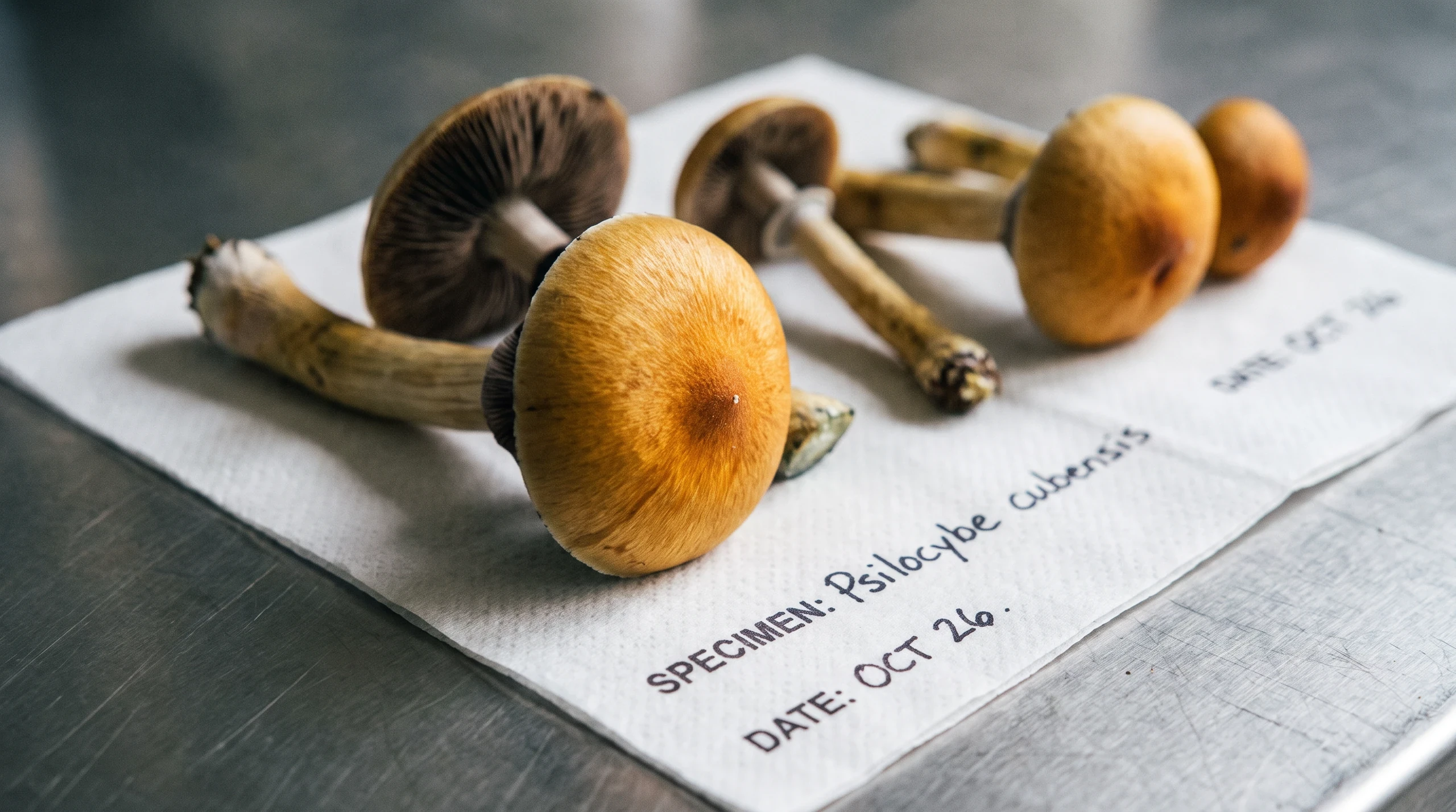
The Golden Teacher has become the face of microdosing culture, showing up in Reddit threads and wellness newsletters as the gentle, reliable cultivar for people who want to optimize their Tuesdays without seeing geometry. The pitch is seductive: sub-perceptual doses of psilocybin, taken on a schedule, delivering creativity, focus, and mood improvements without the commitment of a full psychedelic experience. But when you separate what people report from what controlled studies actually measure, the picture is messier than the microdosing subreddit would have you believe. The Golden Teacher may be popular, but popularity and pharmacological evidence are not the same thing.
What Microdosing Actually Means
Microdosing refers to consuming doses small enough that you do not trip, typically one-tenth to one-fifth of a recreational dose. For Golden Teacher and other Psilocybe cubensis cultivars, that translates to roughly 0.1 to 0.3 grams of dried mushroom, though the exact number varies depending on who you ask and what they are trying to sell you. The dose is supposed to be sub-perceptual, meaning you should not notice you took it beyond a slight mood lift or cognitive edge, no visuals, no body load, no existential realizations in the grocery store checkout line.
People dose on schedules. The Fadiman protocol, named after psychologist James Fadiman who surveyed microdosers, suggests one day on, two days off. Others prefer every other day, four days on and three off, or intuitive approaches where you dose when it feels right. None of these schedules are backed by pharmacokinetic studies specific to microdosing, they are heuristics circulated within communities of self-experimenters. The schedules exist partly to manage tolerance, which develops quickly with serotonergic psychedelics, and partly to avoid the kind of daily use that makes people nervous about dependency even when the substance in question has low addictive potential.
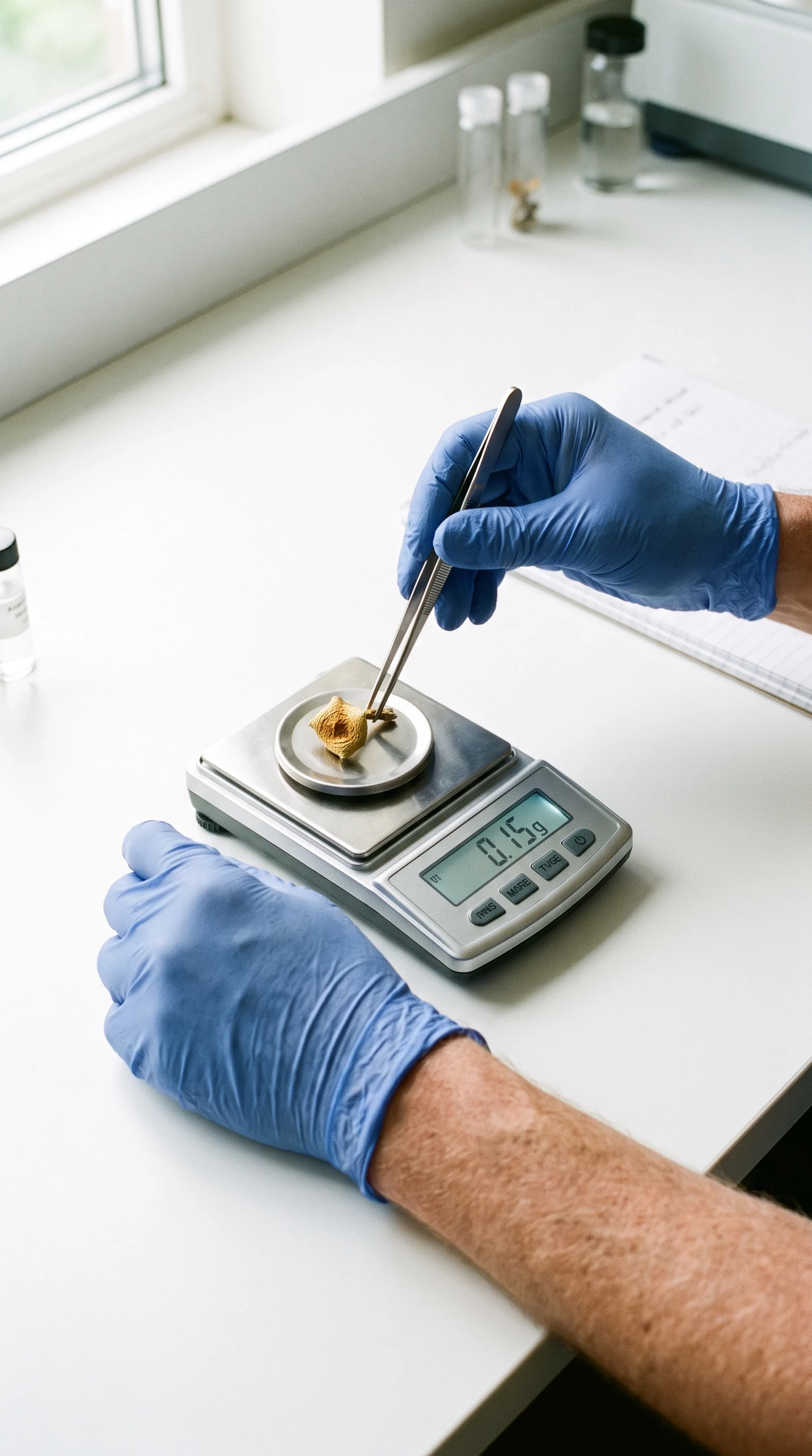
Golden Teacher shows up in microdosing conversations more than any other cultivar, not because it contains a unique alkaloid profile, because it does not, but because it is widely available, moderate in potency, and carries a reputation for being forgiving. Beginners trust the name. That trust is cultural, not chemical.
The Placebo Problem
When researchers tried to measure what microdosing actually does, they hit the same wall: people who think they took psilocybin report feeling better, whether they took psilocybin or a sugar pill. A self-blinding study involving 191 participants asked microdosers to encapsulate their own doses and placebos using a system of QR codes so they would not know which was which. Psychological outcomes improved significantly from baseline, but the placebo group improved just as much. No significant between-group differences survived the blinding. The benefits people experienced were real, but they were not caused by the psilocybin.

The problem runs deeper than wishful thinking. Blinding is supposed to distribute expectancy effects evenly, but blinding often fails in psychedelic research because people can tell when they are on the drug. In the self-blinding trial, 72 percent of participants correctly identified whether they had taken a microdose or placebo, which means the blind was not really blind. When participants know they are on the active treatment and expect it to work, those expectations inflate the measured effect. Researchers at Nature described how weak blinding combined with positive treatment expectancy creates false positives, a dynamic that applies directly to microdosing trials where the subjective effects, however subtle, often give the game away.
Double-blind placebo-controlled studies using psilocybin truffles found limited effects on creativity measures and no reliable improvements in mood, cognition, or emotional processing beyond placebo. A 2025 analysis combining data from three separate trials found that divergent thinking, the ability to generate novel ideas, showed a modest uptick in microdosers, but the effect was inconsistent across trials and disappeared when expectancy was modeled. What looked like a cognitive boost in open-label settings evaporated under controlled conditions.

What People Report vs What Studies Measure
The gap between anecdotal evidence and trial outcomes is wide enough to drive a mushroom farm through. Surveys of microdosers consistently report improvements in mood, focus, creativity, and emotional resilience. A 2019 survey published in Scientific Reports found that people who microdose rate the practice as effective for mental and physical health problems, often more effective than conventional treatments they had tried. These self-reports are not fabricated. People genuinely feel better. The question is whether the mushroom is doing the work or whether the ritual, the intention, the community, and the expectation are doing most of it.
Observational studies, which track people microdosing in the wild, generally report more benefits than experimental trials. Imperial College researchers noted that the science of microdosing remains patchy and anecdotal, with experimental studies focusing on acute effects of single doses while observational studies reflect repeated use over weeks or months. The difference in design produces different results. Naturalistic studies capture the full context of microdosing, the routine, the intention-setting, the lifestyle changes that often accompany it, while controlled trials isolate the drug and, in doing so, strip away the context that may be generating the benefits.

Golden Teacher's role in these reports is largely incidental. When someone describes microdosing Golden Teacher as life-changing, they are reporting an experience shaped by dose, set and setting, expectation, and the fact that they chose to do this in the first place. Swap in another moderate-potency cubensis and the experience would likely be indistinguishable. The cultivar is a delivery vehicle, not the active ingredient in the reported transformation.
Tolerance, Schedules, and the Unsettled Science
Psilocybin tolerance develops through downregulation of serotonin 5-HT2A receptors, the same receptors responsible for the psychedelic effect. Repeated activation causes the brain to reduce receptor density, making subsequent doses less effective. Research on tolerance timelines suggests tolerance peaks immediately after dosing, drops to roughly 50 percent by day three, 20 percent by day seven, and returns to baseline around day 14. Most of this data comes from animal models and anecdotal reports, not controlled human studies tracking receptor recovery in real time.

The dosing schedules people use are attempts to stay ahead of tolerance while avoiding daily use. The Fadiman protocol's one-day-on, two-days-off rhythm aligns loosely with the tolerance curve, giving receptors time to recover between doses. But the schedule was not derived from pharmacokinetic modeling, it emerged from surveying early adopters and codifying what seemed to work. Other schedules exist because microdosing is still a folk practice dressed in the language of optimization. No one has run a head-to-head trial comparing schedules to determine which, if any, maximizes benefit or minimizes tolerance over months of use.
Golden Teacher's moderate potency, typically 0.5 to 0.9 percent psilocybin by dry weight, makes it a predictable choice for microdosing but does not exempt it from tolerance dynamics. A 0.2-gram microdose of Golden Teacher contains roughly 1 to 1.8 milligrams of psilocybin, enough to engage the 5-HT2A receptor without producing overt psychedelic effects. Whether that engagement, repeated over weeks, leads to lasting receptor changes or requires escalating doses is not well documented. Anecdotal reports suggest some microdosers do increase their dose over time, while others report stable effects on a fixed dose. The variance suggests individual differences in metabolism, receptor density, or placebo responsiveness.
The Legal and Practical Context
Psilocybin remains a Schedule I controlled substance under U.S. federal law and is illegal in most countries, which complicates research, access, and honest reporting. People microdosing with Golden Teacher are operating in a legal gray zone or outright breaking the law, depending on jurisdiction. Oregon and Colorado have decriminalized psilocybin in specific contexts, and a handful of cities have deprioritized enforcement, but those exceptions do not change the federal status or the status in most of the world.

The illegality creates barriers to good research. Institutional review boards are cautious about approving studies involving Schedule I substances, and participants willing to microdose in a trial may not represent the broader population of people microdosing at home. Naturalistic studies rely on self-reported data from people already committed to the practice, which introduces selection bias. The people motivated enough to track their microdosing in a survey are not a random sample, they are early adopters with strong priors about efficacy.
Illegality also means quality control is a gamble. Cultivating Golden Teacher at home or buying from the gray market offers no standardization of psilocybin content. Two batches of the same cultivar can vary in potency depending on growing conditions, substrate, and harvest timing. People microdosing without lab testing are guessing at their dose, which introduces noise into both personal outcomes and aggregated reports. The 0.1-gram dose that feels sub-perceptual from one batch might be perceptual from another.
What the Evidence Does Not Establish
The evidence does not establish that microdosing psilocybin reliably improves cognition, mood, or creativity beyond placebo in controlled settings. It does not establish optimal dosing schedules, duration of use, or long-term safety. It does not identify who might benefit or who might experience adverse effects. It does not demonstrate that Golden Teacher, specifically, offers advantages over other Psilocybe cubensis cultivars or other psilocybin-containing species.

What the evidence does show is that people who microdose often report benefits, that those benefits correlate strongly with expectations, and that blinding significantly reduces measured effects. The most rigorous studies to date, double-blind placebo-controlled trials, have not found reliable cognitive or emotional improvements attributable to the drug itself. That does not mean microdosing does nothing, it means the mechanism of action, if there is one distinct from placebo, has not been convincingly isolated.
The gap between what microdosing culture promises and what the data supports is not trivial. Enthusiasts describe microdosing as a tool for productivity, mental health, and self-optimization. Controlled trials describe modest, inconsistent effects that often disappear when you account for expectation. Both can be true in different senses. The ritual of microdosing, the intentionality, the act of doing something proactive for your mental state, may generate real benefits even if the psilocybin itself is pharmacologically inert at sub-perceptual doses. But that is a different claim than the one most people think they are making when they microdose Golden Teacher on a Tuesday morning.
The Distance Between Trend and Data
Microdosing has outrun the evidence. It became a wellness trend, a productivity hack, a thing people recommend to their friends before researchers finished figuring out whether it works. Golden Teacher became the poster cultivar for that trend not because of unique chemistry but because of availability, reputation, and timing. The cultivar's moderate potency and cultural capital made it the default choice, which in turn reinforced its status as the default choice, a feedback loop that has little to do with comparative efficacy.

The science will eventually catch up. More trials are underway, some with better blinding strategies, some tracking longer durations of use, some attempting to measure outcomes the earlier trials missed. Until those results are in, microdosing remains a practice supported more by anecdote and expectation than by pharmacological evidence. That does not make it worthless. Placebo effects are real effects, and rituals that help people feel more focused or emotionally balanced have value even when the mechanism is psychological rather than chemical. But it does mean the current enthusiasm is speculative, a bet on a future evidence base that has not yet materialized.
Golden Teacher will likely remain popular regardless of what future trials find, because the appeal of microdosing is not purely empirical. It offers a sense of agency, a low-stakes entry point into psychedelic experience, and a community of people trying to optimize their lives in a world that often feels unoptimizable. The mushroom is part of the story, but not the whole story. The hype, for now, is ahead of the evidence.
Frequently asked questions
Does microdosing Golden Teacher actually work better than placebo?
How much Golden Teacher is considered a microdose?
Why is Golden Teacher so popular for microdosing?
How often should you microdose to avoid tolerance?
Is microdosing psilocybin legal?
Ready to apply what you've learned?
Browse lab-tested magic mushrooms, edibles, microdose capsules and teas — shipped discreetly across the United States.