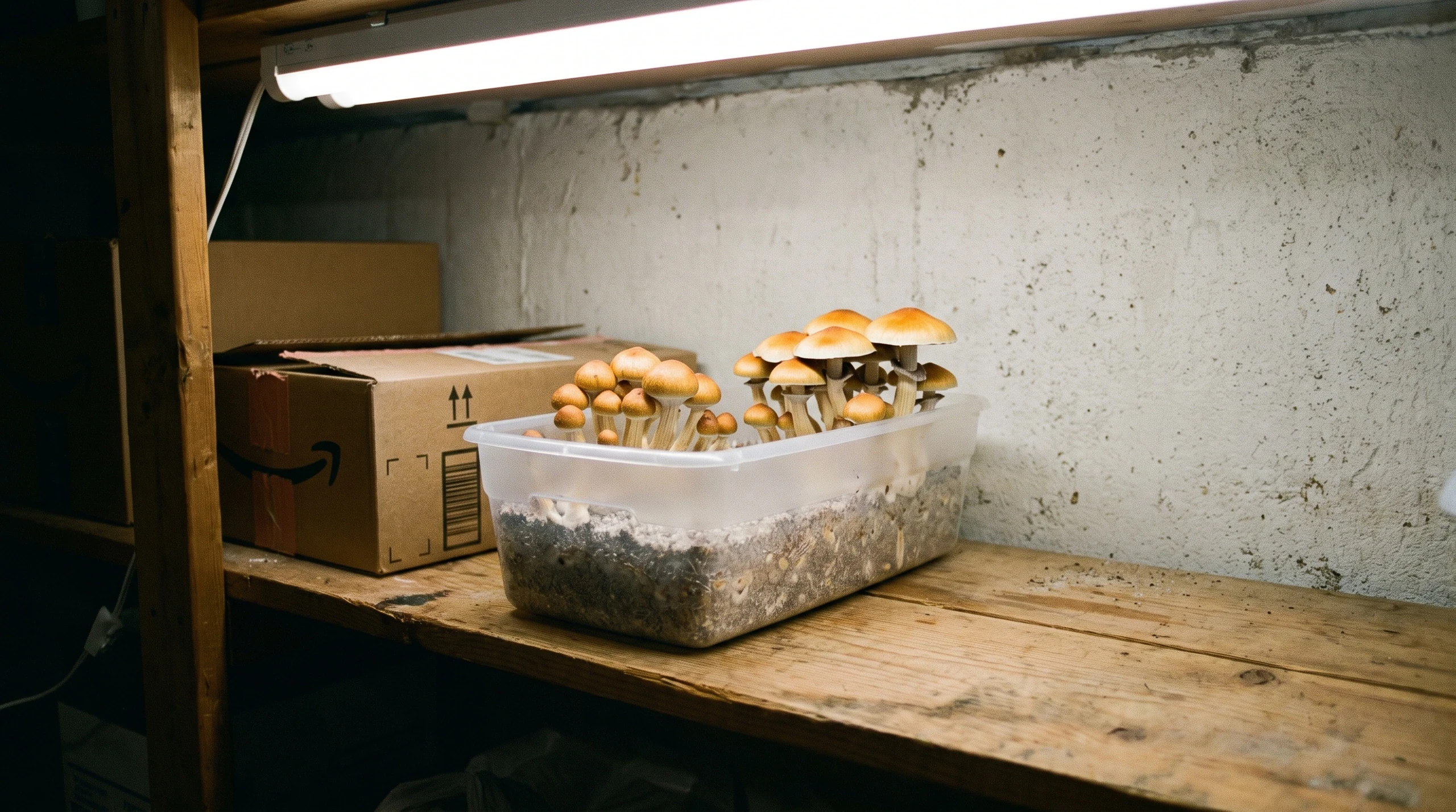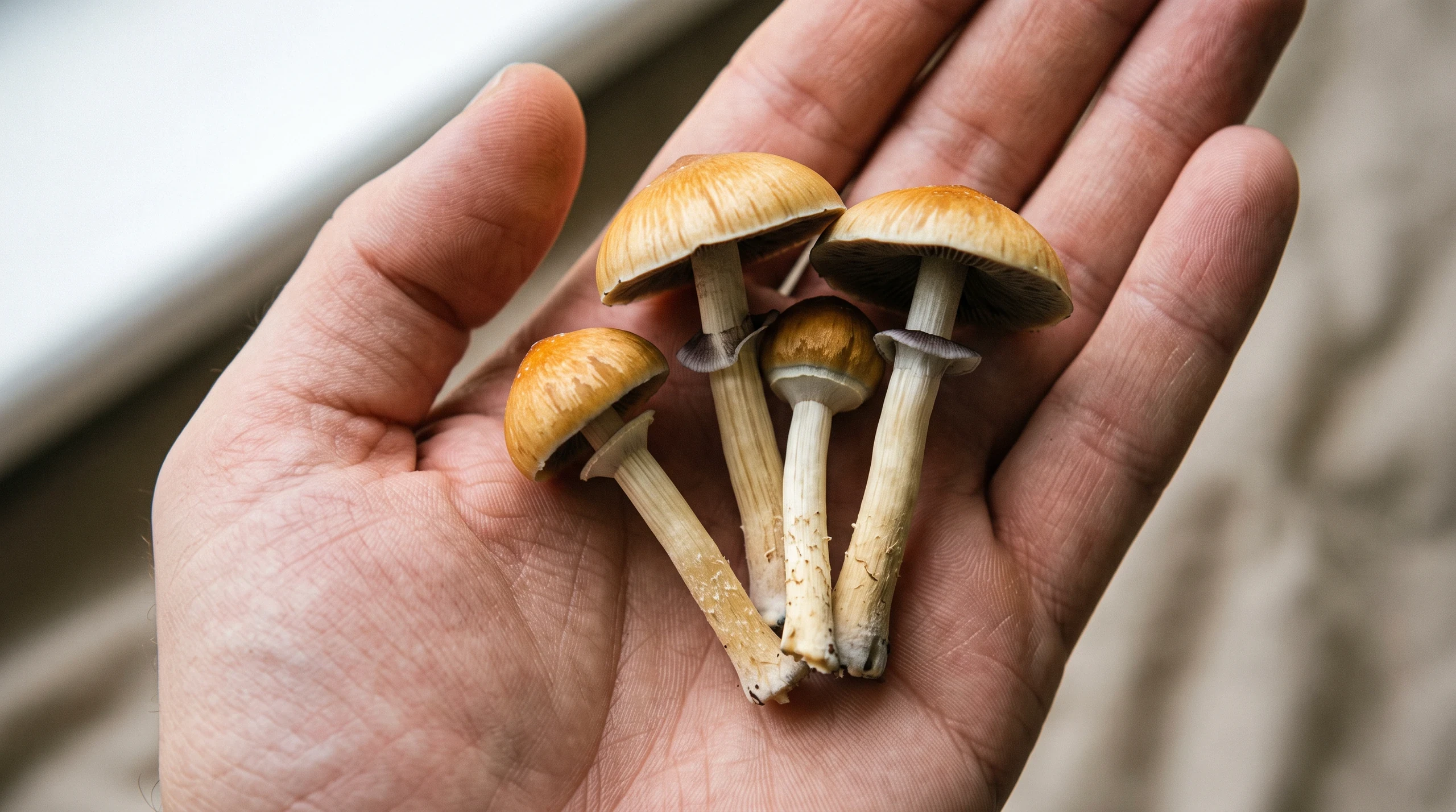
You can take Golden Teacher mushrooms a dozen times without incident and still walk into a psychotic break on dose thirteen. The clinical term is hallucinogen-induced psychosis, the street version is "losing your grip," and the common thread is that nobody saw it coming. This is not about recreational excess or bad batches or festival folklore. This is about a small but real cohort of people for whom psilocybin, the active compound in Golden Teacher and every other magic mushroom, flips a switch that does not easily flip back. Some recover in hours. Some take weeks. A few never fully return to baseline.
The risk is low enough that most users will never encounter it. It is high enough that pretending it does not exist has put people in psychiatric wards. The conversation around Golden Teacher has tilted heavily toward microdosing protocols, therapeutic promise, and the mushroom's reputation as a gentle introduction to psilocybin. That reputation is not unearned, but it has created a casual confidence that does not account for the small percentage of users walking around with invisible contraindications. Family history of schizophrenia. Undiagnosed bipolar disorder. A genetic vulnerability that will not show up until the mushroom surfaces it. These are not fringe cases. They are predictable outcomes in a large enough sample.
The Numbers Behind the Risk
A meta-analysis published in Molecular Psychiatry in 2024 synthesized data from nine studies and found the incidence of psychedelic-induced psychosis at 0.002% in population studies, 0.2% in uncontrolled trials, and 0.6% in randomized controlled trials. Those percentages sound comfortingly small until you scale them. If ten thousand people consume Golden Teacher mushrooms in a given year, that 0.2% baseline translates to twenty individuals experiencing a psychotic episode. The number climbs sharply when the user has a pre-existing vulnerability. In uncontrolled trials that included individuals with schizophrenia, 3.8% developed long-lasting psychotic symptoms.

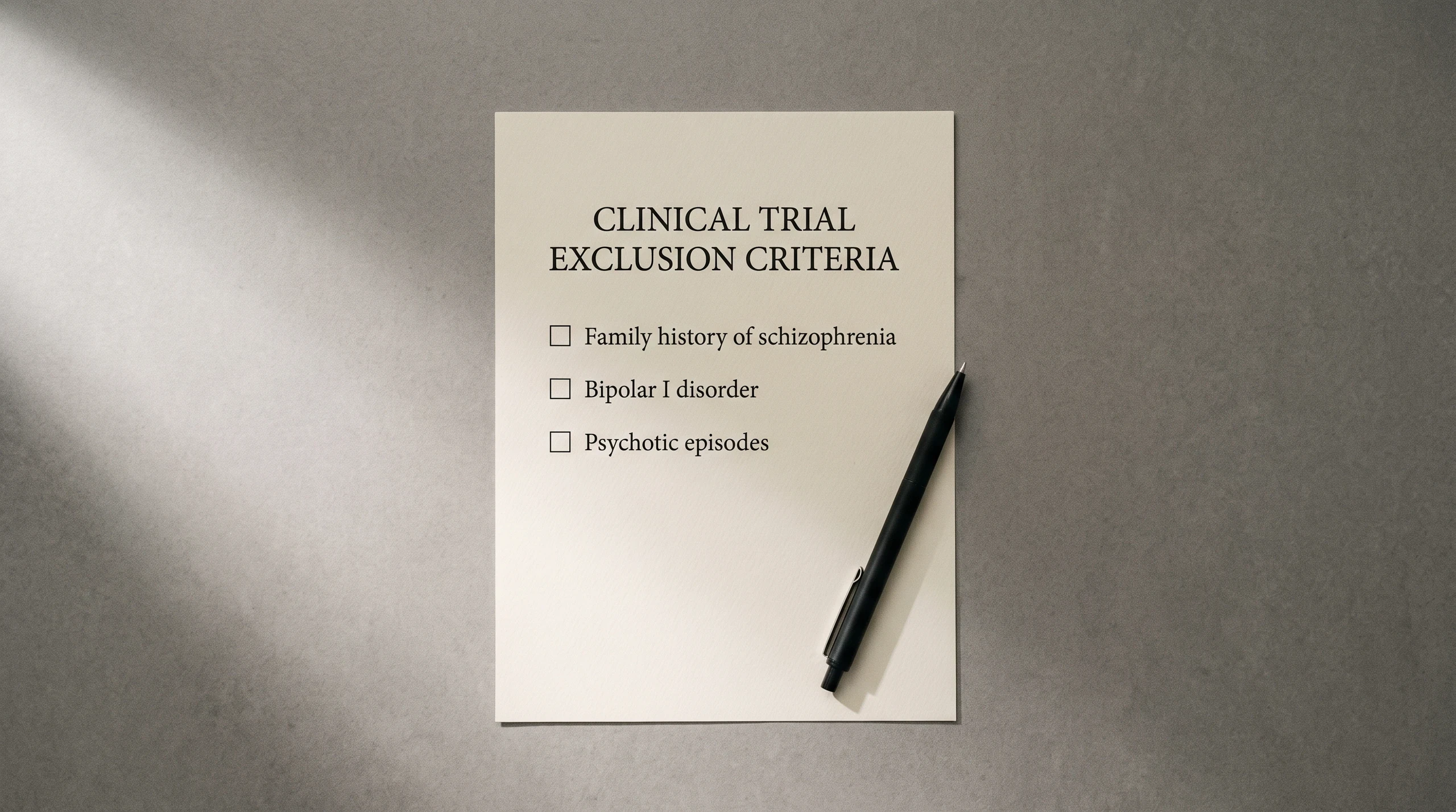
The Ontario study tracking over 9.2 million individuals found that those with a hallucinogen-related emergency department visit had a 21-fold increased risk of developing schizophrenia compared to the general population. Even after controlling for co-occurring substance use and mental health disorders, the study found a 3.5-fold increased risk. The researchers were careful to note that correlation does not establish causation, that people predisposed to schizophrenia may also be more likely to use hallucinogens. But the association is strong enough that every major clinical trial now excludes participants with personal or family histories of psychotic disorders or bipolar I disorder.
The Golden Teacher cultivar does not appear in these studies by name. Researchers studying psilocybin use synthetic or pharmaceutical-grade material, not dried mushrooms harvested from monotubs in suburban garages. But Golden Teacher is a vehicle for the same alkaloid, and its potency fluctuates unpredictably from flush to flush, cap to cap. A user aiming for a threshold dose may land in heroic territory without realizing it. The psychiatric risk scales with the dose.
Who Is Actually at Risk
The contraindications are clearer in clinical settings than they are in living rooms. Every major psilocybin trial excludes people with a first-degree family history of schizophrenia or schizoaffective disorder, even if the participant has never experienced symptoms themselves. A parent or sibling diagnosed with a psychotic disorder is treated as an absolute contraindication. So is any personal history of mania, psychosis, or bipolar disorder. These are not precautions born from an abundance of caution. They are drawn from case reports of people who ignored them.

The UC Berkeley Center for the Science of Psychedelics lists schizophrenia and bipolar disorder as the highest-risk psychiatric conditions. Psychedelics can trigger manic episodes in individuals with bipolar disorder, even if the mania has been stable for years. The mechanism is not fully understood, but it appears related to serotonin receptor activity and the ways psilocybin disrupts default mode network connectivity. In some users, that disruption is therapeutic. In others, it destabilizes an already fragile regulatory system.
Cannabis use shows up repeatedly in case studies of psilocybin-induced psychosis. One case report from Clinical Psychopharmacology and Neuroscience described a patient with no prior psychiatric diagnosis who developed acute psychosis after consuming psilocybin mushrooms. The primary predisposing factors were a family history of psychiatric disorders and a personal history of cannabis use. The interaction between cannabis and psilocybin is poorly studied, but both substances modulate neurotransmitter systems in ways that can compound risk.
Personality traits matter less than the research initially suggested, but they still show up in the data. Individuals with schizotypal traits, those who already experience mild perceptual distortions or magical thinking, appear to be at moderately elevated risk. The development of psychedelic-induced psychosis is multifactorial. You cannot reduce it to one gene, one drug, or one missed warning sign. It is an interaction effect, and the more risk factors you stack, the steeper the odds.
What Psychosis Actually Looks Like
The term gets used loosely in trip reports, applied to any experience that felt unmanageable in the moment. Actual psychosis has a clinical definition. It involves a break from consensus reality that persists beyond the drug's pharmacological window. Delusions, paranoia, disorganized speech, hallucinations that the user cannot distinguish from external stimuli. In the context of Golden Teacher, that might mean believing that the visuals are messages from a malevolent entity, that other people can hear your thoughts, or that you have discovered a cosmic truth that requires immediate, irrational action.
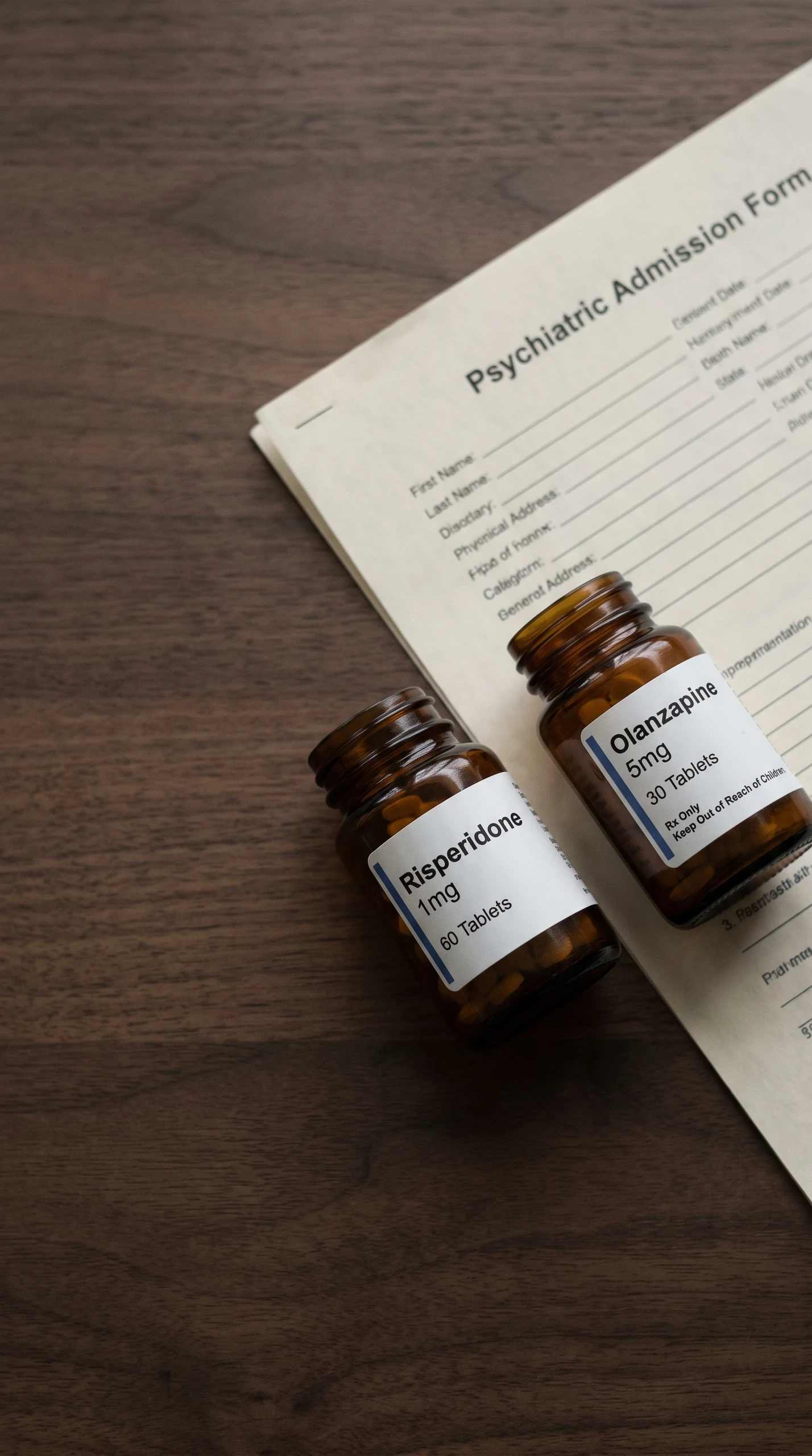
Most bad trips resolve as the psilocybin clears the system. Psychosis does not. It lingers for days, sometimes weeks. The user may require antipsychotic medication, hospitalization, or both. Research on acute adverse effects shows that the majority of negative reactions to psilocybin, transient anxiety, nausea, and perceptual distortions, resolve within 48 hours. Psychosis is the exception. When it happens, it tends to unfold gradually. The user notices that their thinking has become strange, that connections they are making do not hold up under scrutiny, but they lack the cognitive distance to course-correct.
In some cases, the psychosis is indistinguishable from a first schizophrenic episode. The question of whether the psilocybin caused the schizophrenia or simply revealed a latent vulnerability is difficult to answer and, from the user's perspective, irrelevant. The outcome is the same. There are documented cases in which a single high dose of Golden Teacher precipitated a psychotic disorder that required long-term treatment. There are others in which the psychosis cleared after a few days and never recurred. Predicting which trajectory a given user will follow is not currently possible.
The Chronic Aftermath
A separate but related risk is hallucinogen persisting perception disorder, known in the literature as HPPD. It is not psychosis. The user retains insight into the fact that the perceptual disturbances are not real. But the disturbances persist. Visual snow, halos around light sources, trails following moving objects, geometric patterns superimposed on blank surfaces. Research published in Nature describes HPPD as a rare clinical condition in which patients who have had previous exposure to a hallucinogenic substance continue to experience perceptual distortions months to years after complete cessation.
The phenomenon was first described in 1954 but only recognized as a formal diagnosis in the DSM-IV-TR in 2000. HPPD is associated with classic psychedelics, LSD more commonly than psilocybin, but Golden Teacher is not exempt. In one study, 11% of those reporting long-term perceptual changes attributed them to psilocybin use. Symptoms can be episodic, triggered by stress or subsequent substance use, or continuous. Episodes may last for five years or more. There is no proven treatment. Some patients respond to anticonvulsants or benzodiazepines. Most learn to live with it.
The impact on quality of life varies. For some, HPPD is a mild annoyance, visual static that fades into the background after a few months. For others, it is disabling. The persistent distortions interfere with work, with driving, with any task that requires sustained visual focus. The distress is compounded by the fact that most clinicians are unfamiliar with the condition and that there is no clear prognosis. You cannot predict who will develop HPPD after taking Golden Teacher, and you cannot predict whose symptoms will resolve and whose will calcify into a permanent alteration of perception.
What the Studies Cannot Tell You
The clinical trials generating headlines about psilocybin's therapeutic potential are not studying Golden Teacher. They are using pharmaceutical-grade psilocybin in controlled environments with extensive screening protocols, trained facilitators, and immediate access to psychiatric intervention if something goes wrong. The average person eating dried caps from an online vendor or a friend's closet grow is operating in a different universe of risk. No medical history review. No cardiovascular screening. No professional present if the experience turns.
Research limitations are not just a methodological footnote. They are a safety issue. When a study reports that psilocybin is well-tolerated in patients with treatment-resistant depression, that finding applies to a population that was rigorously screened to exclude anyone at elevated risk. It does not apply to a random sample of people buying Golden Teacher spores and following a Shroomery tek. The safety profile changes dramatically when you remove the safeguards.
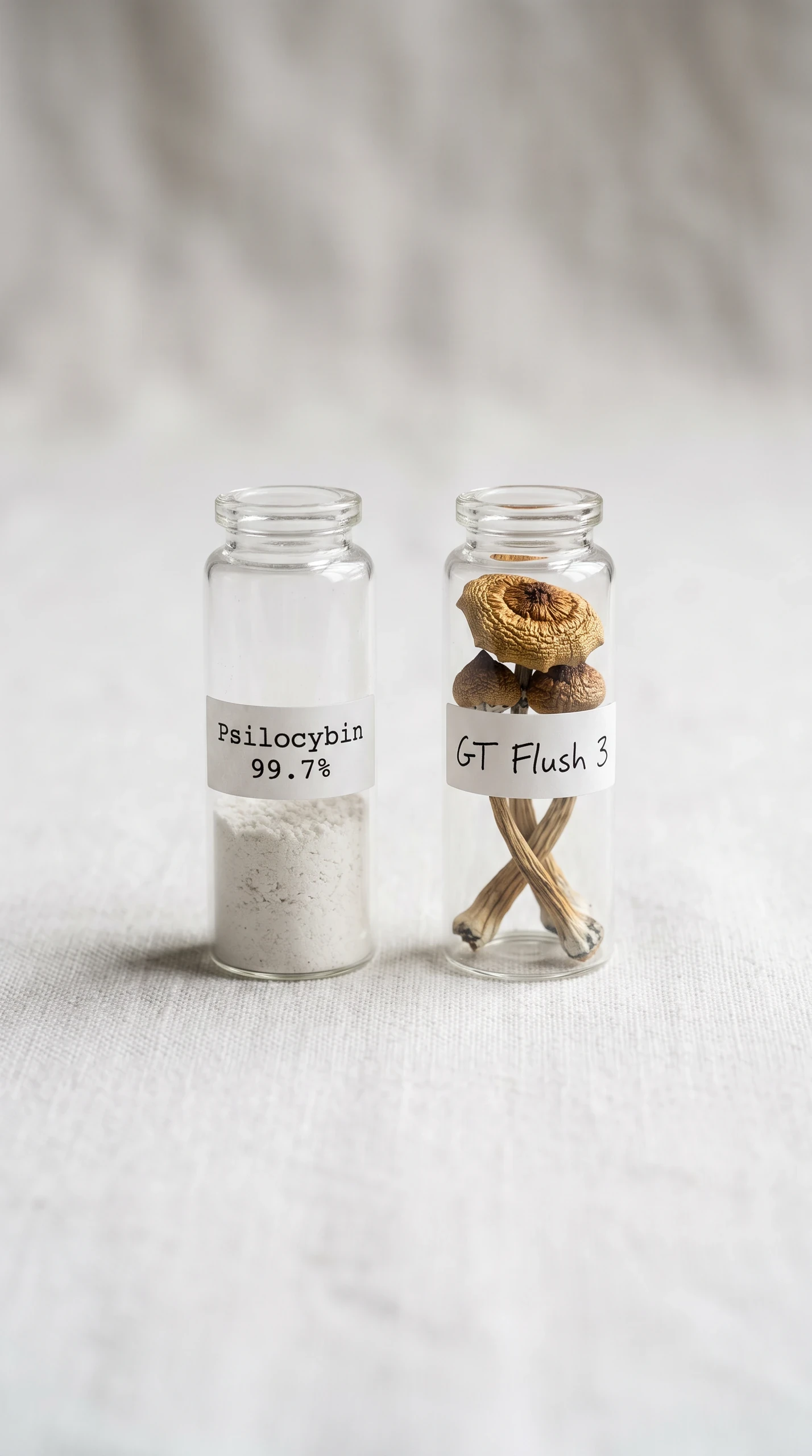
The dose matters, but dose control is nearly impossible with whole mushrooms. A single Golden Teacher cap might contain 0.2% psilocybin or 1.2% psilocybin depending on growing conditions, genetics, and which part of the flush it came from. A user taking three grams of dried material could be getting a museum dose or a full dissolution of ego boundaries. The psychiatric risks scale with intensity. A threshold experience that produces mild visual distortions is unlikely to trigger psychosis. A heroic dose that obliterates the sense of self is another matter.
Set and setting are often framed as harm reduction basics, the idea that a calm environment and a positive mindset reduce the likelihood of a difficult trip. They do. But they do not reduce the likelihood of psychosis in someone with a genetic predisposition. You cannot meditate your way out of a manic episode. You cannot sage a room into negating a family history of schizophrenia. The advice is not wrong, but it is insufficient as a safeguard against psychiatric outcomes.

The Honest Bottom Line
If you have a personal history of psychosis, mania, or bipolar disorder, you should not take Golden Teacher mushrooms. If you have a first-degree relative with schizophrenia or schizoaffective disorder, you should not take them. These are not suggestions. They are the same exclusion criteria used in every clinical trial, the thresholds below which researchers consider the risk unacceptable. The fact that recreational users ignore these thresholds routinely does not make them less relevant. It makes the users less informed.
If you do not know your family psychiatric history, that is not the same as having a clear history. Psychotic disorders and bipolar disorder run in families. They also go undiagnosed or misdiagnosed, particularly in older generations. Asking your parents whether anyone in the family has had a "nervous breakdown" or spent time in a psychiatric facility is a reasonable starting point. It is not a substitute for a formal screening, but it is better than proceeding in ignorance.

Golden Teacher mushrooms are widely available, relatively easy to grow, and embedded in a cultural narrative that emphasizes their safety and accessibility. That narrative is not entirely false. For the majority of users, the risks are manageable and the acute adverse effects resolve quickly. But the majority is not everyone. The people for whom psilocybin triggers a psychotic break are not statistical noise. They are predictable casualties of a substance that carries real psychiatric risk, particularly in populations with known vulnerabilities.
This is not a moral argument. It is a harm reduction argument. Psilocybin is a controlled substance in most jurisdictions, and possession or cultivation of Golden Teacher mushrooms carries legal consequences. But the legal risk is separate from the medical risk, and conflating the two does not serve anyone. The medical risk is grounded in pharmacology, genetics, and clinical data. It exists whether or not the law acknowledges it, and it scales with dose, with personal history, and with the presence or absence of safeguards.
If you are going to take Golden Teacher mushrooms despite the risks, and many people will, the least you can do is screen yourself honestly. No family history of psychosis or bipolar disorder. No personal history of mania or prolonged dissociation. No concurrent use of stimulants or other substances that destabilize mood. Start with a low dose and in a setting where help is accessible if things go wrong. These precautions will not eliminate the risk, but they will reduce it.

The mushroom does not care whether you respect it. The risk is not karmic. It is biochemical. Some people can take Golden Teacher a hundred times without consequence. Others cannot take it once. The difference is not intention or preparation or spiritual readiness. It is neurochemistry, and it is not negotiable.
Frequently asked questions
Can Golden Teacher mushrooms cause permanent psychosis?
How do I know if I'm at risk for psychosis from Golden Teacher?
What is HPPD and can Golden Teacher cause it?
Are clinical trial results on psilocybin safety relevant to taking Golden Teacher at home?
What should I do if someone is experiencing psychosis after taking Golden Teacher?
Ready to apply what you've learned?
Browse lab-tested magic mushrooms, edibles, microdose capsules and teas — shipped discreetly across the United States.